Experience the Spirit of the Gathering of Nations Powwow
Experience the Spirit of the Gathering of Nations Powwow – For more than four decades, the Gathering of Nations Powwow stood as one of the most powerful celebrations of Indigenous culture in North America. Held annually in Albuquerque, New Mexico, the event brought together Native American and First Nations peoples from hundreds of tribes, creating a vibrant gathering filled with music, dance, art, storytelling, and community. Widely recognized as the largest powwow in North America, the Gathering of Nations became much more than a festival—it evolved into a symbol of cultural pride, resilience, and unity.
Each year, thousands of dancers, singers, artisans, and spectators traveled from across the United States, Canada, and beyond to participate in this extraordinary cultural experience. Whether attending for the first time or returning as a longtime participant, visitors often described the event as unforgettable, inspiring, and deeply meaningful.
Understanding the Powwow Tradition
A powwow is a gathering where Indigenous communities come together to celebrate culture, strengthen social connections, and preserve traditions through dance, music, and ceremony. While individual powwows vary in style and customs, they all share a commitment to honoring Indigenous heritage and fostering community.
Modern powwows evolved from older tribal traditions and became important spaces for cultural exchange among Native nations. Today, they continue to serve as places where knowledge, values, and traditions are passed from one generation to the next.
The Gathering of Nations elevated this tradition to an international level by creating a space where hundreds of tribal nations could come together in a spirit of mutual respect and celebration. According to organizers, the original vision was to provide a place where Native people could gather annually to share culture while ensuring fair participation for singers and dancers.
The Birth of a Cultural Landmark
The Gathering of Nations began in 1983 as a relatively small event organized in Albuquerque. What started as an opportunity for Native students and communities to share their cultures quickly gained popularity and expanded into a major annual festival. Over the years, attendance grew dramatically, transforming the event into one of the most recognized Indigenous cultural gatherings in the world.
As the event expanded, it attracted participants from hundreds of tribes and Indigenous communities across North America. Organizers maintained a strong commitment to cultural authenticity while continually adding new attractions, performances, and educational opportunities.
The festival’s success reflected a growing interest in Indigenous culture and a desire among Native communities to preserve and celebrate their traditions in a public and meaningful way.
The Grand Entry: A Spectacular Beginning
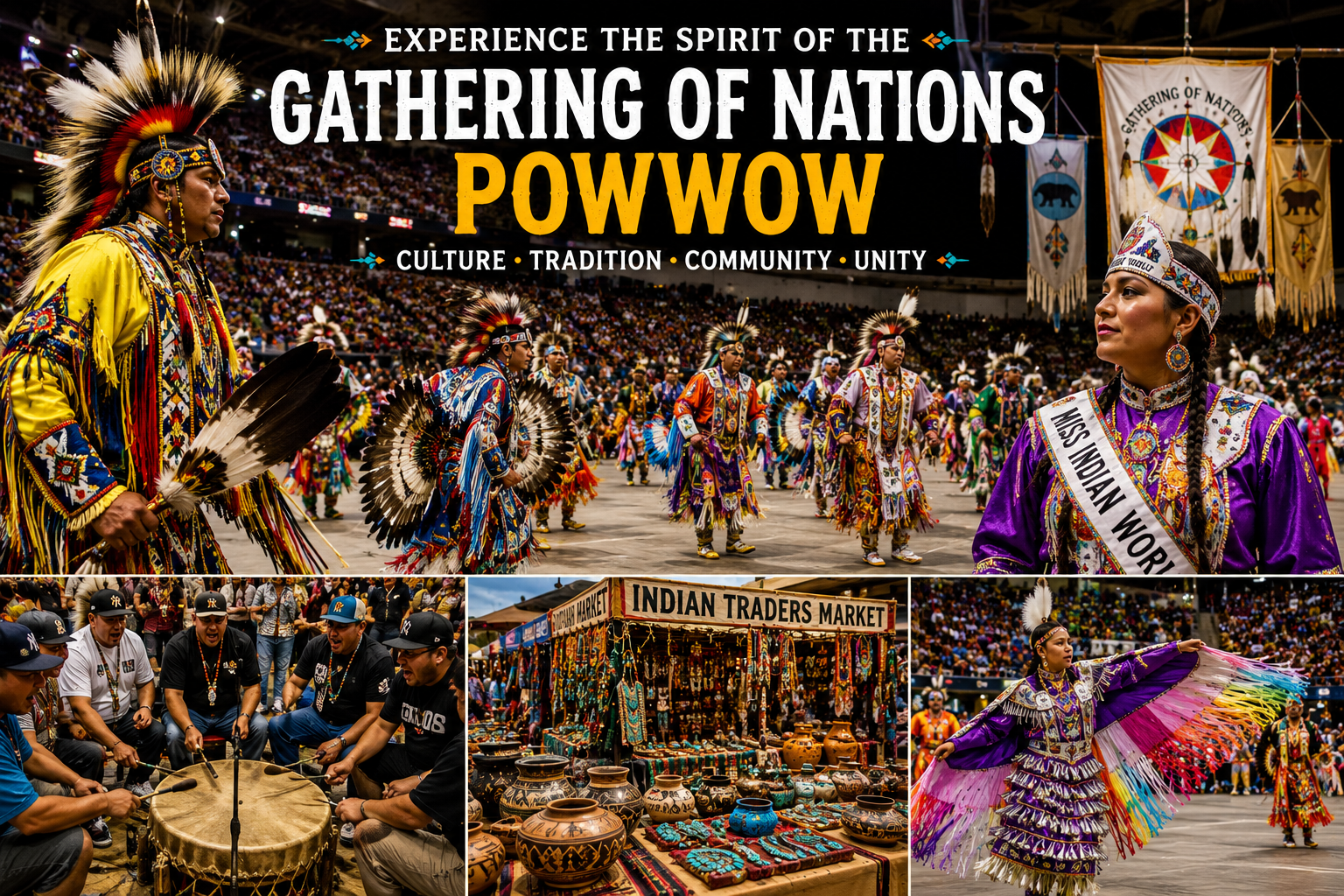
One of the most anticipated moments of the Gathering of Nations Powwow was the Grand Entry. This ceremonial procession marked the official opening of the event and showcased the diversity and beauty of Indigenous cultures.
As drums echoed throughout the arena, dancers representing different tribes entered wearing traditional regalia adorned with feathers, beadwork, bells, ribbons, and intricate designs. The visual impact was breathtaking. Spectators witnessed a sea of color and movement as hundreds, sometimes thousands, of dancers filled the arena floor.
The Grand Entry was more than a performance. It symbolized unity among Indigenous nations and honored the traditions that continue to connect communities across generations.
The Power of Song and Drum
Music is at the heart of every powwow, and the Gathering of Nations featured some of the most respected drum groups in North America.
The drum is often referred to as the heartbeat of Indigenous culture. During performances, singers gather around large drums, creating powerful rhythms that guide dancers and energize the crowd. These songs carry historical, spiritual, and cultural significance and play a vital role in preserving Indigenous traditions.
The sound of multiple drum groups performing throughout the event creates an atmosphere unlike any other festival. For many attendees, the music is one of the most memorable aspects of the experience.
Traditional and Competitive Dancing
Dance competitions have long been a major feature of the Gathering of Nations Powwow. Participants compete in a variety of categories representing different dance traditions and age groups.
Men’s and women’s dances each have distinctive styles, regalia, and cultural meanings. Popular categories include Traditional Dance, Fancy Dance, Grass Dance, Jingle Dress Dance, and Fancy Shawl Dance. Each style showcases unique movements, artistry, and storytelling elements.
The dancers often spend years perfecting their skills while learning the cultural significance behind their performances. The competitions highlight both athleticism and cultural knowledge, making them one of the festival’s most exciting attractions.
Miss Indian World: Celebrating Indigenous Leadership
Another cherished tradition associated with the Gathering of Nations was the Miss Indian World pageant. Unlike conventional beauty contests, this competition focused on cultural knowledge, public speaking, traditional talent, and community leadership.
Contestants represented Indigenous nations from across North America and served as ambassadors for Native culture. Winners used their platform to promote education, language preservation, cultural awareness, and community initiatives.
The pageant became one of the most respected Indigenous leadership programs on the continent and inspired countless young women to embrace their cultural identities.
The Indian Traders Market
Beyond the arena, visitors could explore the Indian Traders Market, one of the largest Indigenous arts and crafts markets in North America.
Hundreds of artisans displayed handcrafted jewelry, beadwork, pottery, textiles, paintings, carvings, and traditional clothing. The market provided an opportunity for artists to share their work while supporting Indigenous entrepreneurship.
For visitors, browsing the market offered a chance to learn about different tribal art forms and purchase authentic handmade creations directly from the artists.
Food, Community, and Cultural Exchange
Food also plays an important role in the powwow experience. Vendors offer traditional Indigenous dishes alongside regional specialties, allowing visitors to sample flavors from different Native cultures.
Equally important are the social connections formed during the event. Families reunite, friendships are strengthened, and cultural knowledge is shared through conversations, workshops, and performances.
Many attendees describe the Gathering of Nations as a place where people from different tribes and backgrounds come together to celebrate shared values while honoring their unique identities. Community members often speak about the event’s ability to create lasting memories and meaningful connections.
Cultural Preservation and Education
One of the Gathering of Nations’ most significant contributions has been its role in cultural preservation. The festival provides a platform for Indigenous communities to showcase traditions that might otherwise receive limited public visibility.
Young people have the opportunity to learn songs, dances, languages, and customs from elders and cultural leaders. Visitors from outside Indigenous communities gain a deeper understanding of Native history, resilience, and contemporary life.
Through education and participation, the event helps challenge stereotypes and promote appreciation for the diversity of Indigenous cultures across North America.
The Final Chapter of an Extraordinary Legacy
In recent years, organizers announced that the 2026 Gathering of Nations would serve as the event’s final edition after a remarkable 43-year history. The farewell celebration, known as “The Last Dance,” marked the conclusion of one of the most influential Indigenous cultural festivals ever created.
While the event itself may have concluded, its impact continues through the countless individuals, communities, artists, dancers, and cultural leaders it inspired. The traditions celebrated at the Gathering of Nations remain vibrant within Indigenous communities throughout North America.
Conclusion
The Gathering of Nations Powwow represented the very best of Indigenous culture, community, and resilience. Through its spectacular dances, powerful music, artistic excellence, and spirit of unity, it created an experience that touched the lives of hundreds of thousands of people.
More than a festival, it was a living celebration of heritage and identity. Its legacy continues to inspire future generations to honor their traditions, share their stories, and celebrate the rich cultural diversity of Indigenous peoples across North America.