Rio de Janeiro Carnival: The World’s Biggest Celebration
Rio de Janeiro Carnival: The World’s Biggest Celebration – Few events on Earth can match the energy, color, and excitement of the Rio de Janeiro Carnival. Held annually in Brazil’s most famous city, this spectacular celebration attracts millions of visitors from around the world and is widely regarded as the largest carnival on the planet. With dazzling samba parades, elaborate costumes, lively street parties, and deep cultural traditions, the Rio Carnival represents the heart and soul of Brazilian culture.
For many travelers, attending the Rio de Janeiro Carnival is a once-in-a-lifetime experience. The event transforms the entire city into a giant stage where music, dance, and creativity take center stage. Whether watching world-famous samba schools compete in the Sambadrome or joining thousands of revelers in the streets, visitors quickly discover why Rio Carnival has earned its reputation as the world’s biggest celebration.
The History of Rio Carnival
The origins of Rio Carnival can be traced back to European traditions brought to Brazil during the colonial period. Portuguese settlers introduced pre-Lenten festivities that eventually merged with local customs and African cultural influences. Over time, the celebration evolved into a uniquely Brazilian event that reflected the country’s diverse heritage.
A major turning point came with the rise of samba music in the early twentieth century. Samba emerged from Afro-Brazilian communities and became closely associated with Carnival celebrations. By the 1920s and 1930s, organized samba schools began forming throughout Rio de Janeiro, creating the foundation for the spectacular parades that define the festival today.
Today, Rio Carnival is more than just a party. It is a cultural institution that showcases Brazil’s history, artistic talent, and community spirit.
The Samba Schools: The Heart of Carnival
At the center of Rio Carnival are the famous samba schools. Despite the name, these organizations are not educational institutions. Instead, they are community-based cultural groups that spend the entire year preparing for Carnival. Each school represents a neighborhood or community and develops a unique theme for its performance.
Months before Carnival begins, thousands of members work together to create costumes, design floats, compose music, and rehearse choreography. The result is an extraordinary production involving dancers, musicians, singers, and artists.
Some of the most celebrated samba schools include Mangueira, Portela, Beija-Flor, Salgueiro, Imperatriz Leopoldinense, and Mocidade Independente. These organizations have built legendary reputations through decades of competition and artistic excellence.
The competition between samba schools is fierce. Judges evaluate performances based on criteria such as music, costumes, floats, choreography, harmony, and overall presentation. Winning the championship is considered one of the highest honors in Brazilian cultural life.
The Sambadrome Spectacle
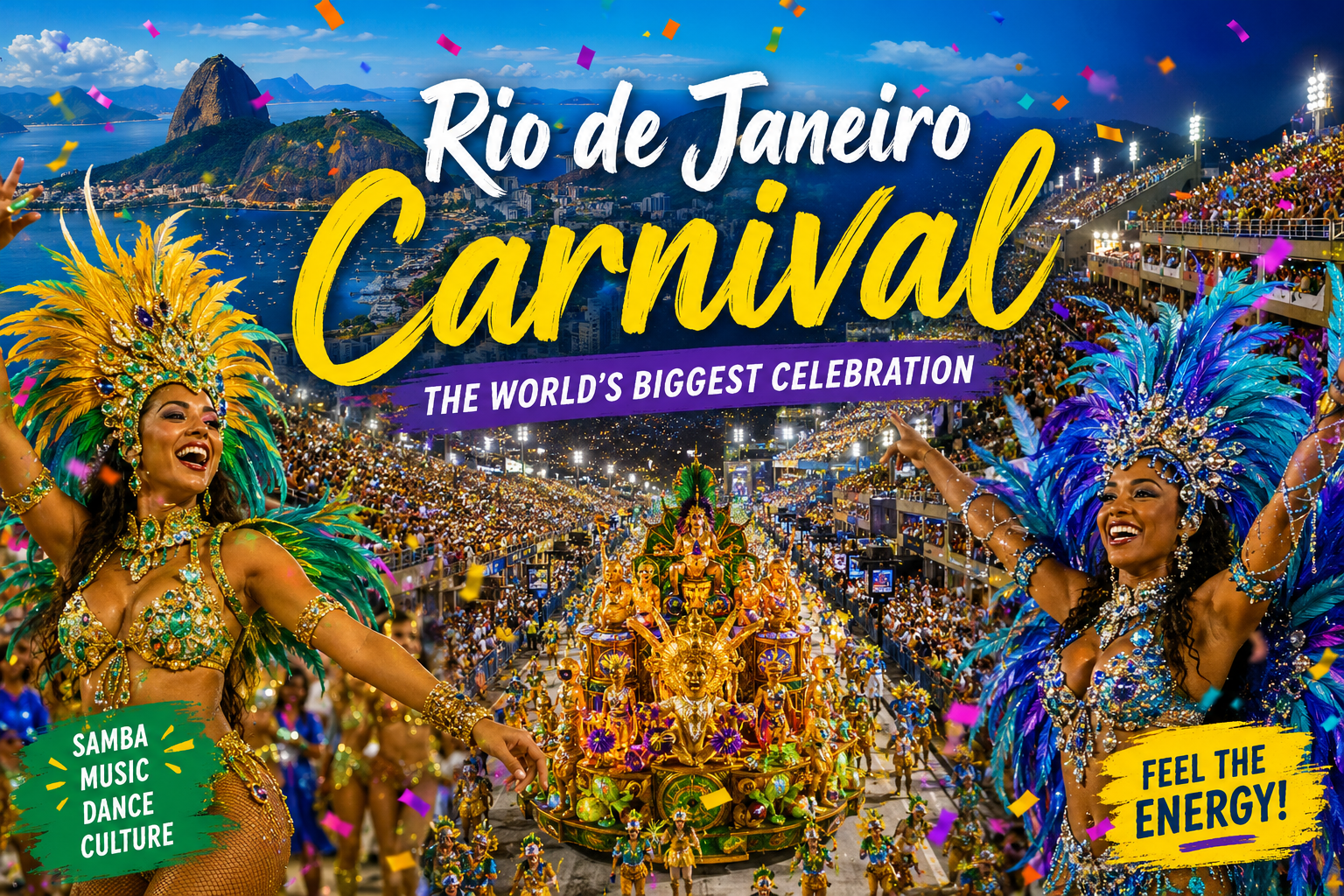
One of the most iconic aspects of Rio Carnival is the Samba Parade held at the Sambadrome Marquês de Sapucaí. This purpose-built venue was designed by renowned Brazilian architect Oscar Niemeyer and opened in 1984. Since then, it has become the main stage for Carnival’s most prestigious events.
During the parade, each samba school has a limited amount of time to present its performance before a panel of judges. Thousands of performers march through the Sambadrome in carefully coordinated displays featuring giant floats, vibrant costumes, and powerful percussion sections.
The atmosphere is electric. Spectators cheer as dancers move to the rhythm of samba drums, while massive floats tell stories inspired by history, mythology, social issues, and Brazilian culture. Every performance is designed to impress both the judges and the audience.
For many visitors, witnessing a samba parade is the highlight of their trip to Brazil. The combination of music, artistry, and community pride creates a truly unforgettable experience.
Street Parties and Blocos
Although the Sambadrome receives global attention, much of Carnival’s magic happens in Rio’s streets. Throughout the city, hundreds of street parties known as “blocos” bring people together for days of celebration.
Each bloco has its own style, music, and traditions. Some attract only a few hundred participants, while others draw hundreds of thousands. Locals and tourists alike dress in colorful costumes, dance to live music, and celebrate in a festive atmosphere that extends across neighborhoods.
One of the most remarkable aspects of the blocos is their inclusiveness. People from different backgrounds, ages, and social classes come together to share the joy of Carnival. This sense of unity and community is one reason why the festival remains so beloved throughout Brazil.
The Cultural Significance of Carnival
Rio Carnival is much more than entertainment. It serves as a powerful expression of Brazilian identity and cultural heritage. The festival reflects the country’s diverse influences, particularly the contributions of Afro-Brazilian communities that helped shape samba music and Carnival traditions.
Many samba school performances explore themes related to history, social justice, indigenous cultures, environmental issues, and national pride. Through music, dance, and storytelling, Carnival provides a platform for communities to share important messages with millions of viewers.
The event also preserves artistic traditions that have been passed down through generations. Costume design, float construction, percussion music, and samba dancing all play important roles in maintaining Brazil’s cultural legacy.
Economic Impact on Rio de Janeiro
The Rio Carnival is not only a cultural phenomenon but also a major economic driver. Every year, millions of visitors travel to Rio de Janeiro, generating substantial revenue for hotels, restaurants, transportation services, and local businesses.
Carnival preparations create employment opportunities for thousands of people, including costume makers, musicians, designers, carpenters, dancers, and event organizers. Entire communities benefit from the economic activity generated by the festival.
For many neighborhoods, participation in Carnival provides both financial support and a source of local pride. The success of a samba school can bring increased investment and recognition to its community.
Why Tourists Love Rio Carnival
Visitors from around the world are drawn to Rio Carnival for several reasons. First, the festival offers a unique opportunity to experience Brazilian culture firsthand. The music, food, dance, and traditions provide an immersive cultural experience unlike any other.
Second, the visual spectacle is breathtaking. From glittering costumes to enormous floats, every aspect of Carnival is designed to inspire awe. Photographers and travelers often describe the event as one of the most colorful celebrations in the world.
Third, the atmosphere is incredibly welcoming. Whether attending a parade, joining a bloco, or exploring the city, visitors are encouraged to participate and celebrate alongside locals. This sense of shared joy creates lasting memories for many travelers.
The Future of Rio Carnival
Despite changing times, Rio Carnival continues to thrive. New technologies, creative themes, and evolving artistic styles keep the festival fresh while preserving its traditional roots. Samba schools constantly innovate to deliver more impressive performances and engage new generations of participants.
The global popularity of Carnival also continues to grow, with millions watching broadcasts and online coverage from around the world. As a result, Rio Carnival remains one of the most influential cultural events on the planet.
Conclusion
Rio de Janeiro Carnival is far more than a festival—it is a celebration of culture, creativity, and community. From its historic origins and world-famous samba schools to its energetic street parties and economic impact, Carnival embodies the spirit of Brazil in a way few events can.
Every year, millions gather to dance, sing, and celebrate life in one of the most spectacular festivals ever created. For anyone seeking an unforgettable cultural experience, Rio de Janeiro Carnival truly lives up to its reputation as the world’s biggest celebration.