Pasola Festival: The Legendary Warrior Ritual of Sumba
Pasola Festival: The Legendary Warrior Ritual of Sumba – The island of Sumba, located in eastern Indonesia, is home to one of the most extraordinary cultural traditions in Southeast Asia. Known as the Pasola Festival, this centuries-old ritual combines horseback riding, spear throwing, spirituality, and community celebration in a spectacle unlike any other. Far more than a simple cultural performance, Pasola is a sacred ceremony deeply connected to the beliefs, history, and agricultural life of the Sumbanese people.
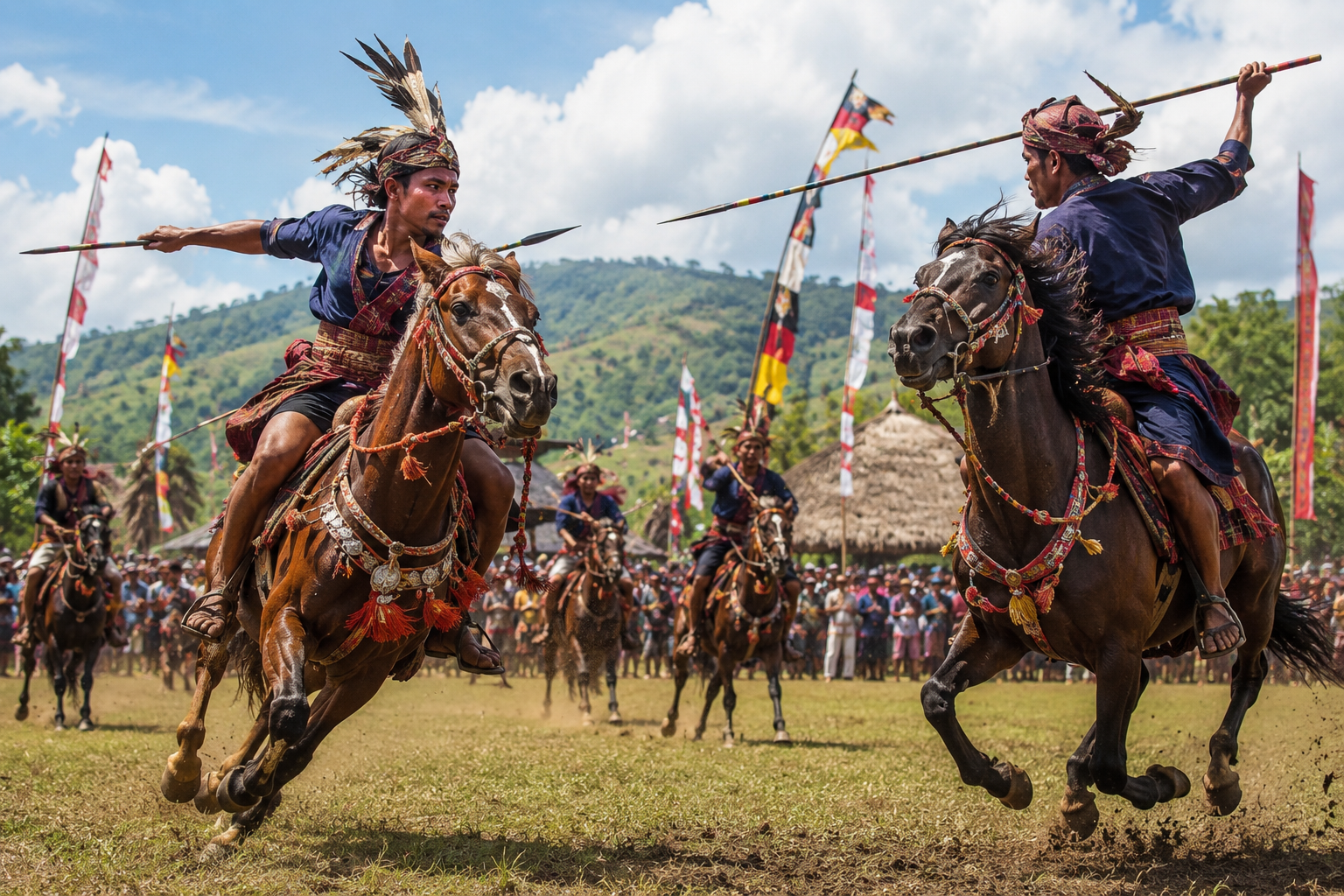
Every year, thousands of local residents and visitors gather to witness warriors on horseback charging across open fields while hurling wooden spears at one another. The dramatic scenes often attract international attention, yet the true significance of Pasola lies not in the battle itself but in its role as a ritual honoring ancestors and seeking blessings for a successful harvest.
What Is the Pasola Festival?
Pasola is a traditional mounted spear-fighting ceremony practiced in western Sumba. During the event, groups of horsemen representing different villages engage in mock battles by throwing wooden spears at opposing riders while galloping across the field. The word Pasola comes from the local term sola or hola, meaning a wooden spear or lance.
Although it may appear to outsiders as a competitive sport or historical reenactment, Pasola is fundamentally a sacred ritual. It is closely tied to the indigenous Marapu belief system, which emphasizes harmony between humans, nature, and ancestral spirits. For generations, the Sumbanese people have viewed Pasola as a way to maintain balance in the world and ensure prosperity for their communities.
Today, Pasola remains one of Indonesia’s most remarkable living traditions and is considered a powerful symbol of Sumba’s cultural identity.
The Origins of Pasola Festival
Like many ancient traditions, Pasola blends history, legend, and spiritual belief.
One popular legend tells of a woman from the village of Waiwuang whose husband, a respected leader, disappeared for a long period. Believing him dead, she eventually fell in love with another man and remarried. When her husband unexpectedly returned, the community organized a ceremonial battle to ease tensions and restore harmony among the villages. Over time, this symbolic conflict evolved into the Pasola tradition.
Beyond legend, scholars and local elders believe Pasola has roots stretching back centuries as part of Sumba’s agricultural cycle. Historically, warfare and clan rivalries were common on the island. Ritualized combat may have developed as a controlled way to express competition while reinforcing social bonds between communities.
Regardless of its precise origins, Pasola has become a cornerstone of Sumbanese culture and remains one of the island’s most important ceremonial events.
The Spiritual Meaning Behind the Ritual
To fully understand Pasola, it is important to look beyond the excitement of the horseback battles.
The ceremony is deeply connected to the Marapu religion, an indigenous belief system centered on ancestral worship and respect for the natural world. According to traditional belief, Pasola helps maintain harmony between the visible and invisible realms. Ancestors are honored, spiritual forces are acknowledged, and blessings are sought for the coming planting season.
Historically, the spilling of blood during the ritual was considered an important element of the ceremony. The Sumbanese believed that blood falling onto the earth would fertilize the land and contribute to a successful harvest. While modern safety measures have reduced the severity of injuries, the symbolic connection between sacrifice, fertility, and agricultural abundance remains central to the tradition.
For local communities, Pasola is not simply entertainment. It is a sacred obligation passed down through generations.
The Role of the Nyale Sea Worms
One of the most fascinating aspects of Pasola is its connection to the annual appearance of Nyale, colorful sea worms that emerge along Sumba’s coastline.
According to local belief, the arrival of Nyale signals the beginning of an important seasonal transition. Their appearance is interpreted as a message from ancestral spirits indicating that the time is right for planting crops and conducting the Pasola ceremony.
Before the battle begins, communities gather on beaches during the early morning hours to collect the worms. This event, often called the Nyale Festival, is itself a significant cultural celebration involving prayers, rituals, and communal activities.
The relationship between Nyale and Pasola demonstrates how closely traditional Sumbanese culture remains connected to natural cycles and environmental observation.
The Famous Horseback Battles
The most dramatic moment of Pasola occurs when hundreds of riders enter the field.
Mounted on Sumba’s famous Sandalwood horses, warriors charge toward one another at high speed while throwing wooden spears. These horses, known for their endurance, agility, and cultural importance, have played a vital role in Sumbanese society for generations.
The battles require exceptional riding skill, courage, and coordination. Riders must control their horses while avoiding incoming spears and attempting to strike their opponents. Spectators often witness breathtaking displays of horsemanship as horses gallop across open terrain.
In earlier times, the spears were sharper and injuries were more common. Today, the spear tips are generally blunted to improve safety, although accidents can still occur due to the physical nature of the event.
Despite these modern adjustments, the intensity and excitement of Pasola remain largely unchanged.
Traditional Ceremonies and Preparations
Pasola is not a single event but part of a larger sequence of ceremonies.
Preparations begin well before the battles themselves. Marapu priests and community leaders conduct rituals to determine the appropriate dates and ensure that ancestral spirits are properly honored. Offerings are made, prayers are recited, and various traditional customs are observed.
Participants often wear traditional attire and gather with family members and fellow villagers to celebrate their shared heritage. Music, dancing, storytelling, and ceremonial gatherings help strengthen community ties while preserving cultural knowledge.
These preparations highlight the fact that Pasola is not solely about combat. It is equally about community identity, spirituality, and continuity between generations.
Pasola Festival and Modern Tourism
Over the past few decades, Pasola has gained international recognition as one of Indonesia’s most unique cultural attractions.
Travelers from around the world visit Sumba to witness the event firsthand. The combination of traditional warfare, indigenous spirituality, and stunning island landscapes creates a powerful cultural experience that few destinations can offer.
Tourism has brought economic opportunities to local communities while increasing global awareness of Sumba’s heritage. However, community leaders continue to emphasize that Pasola is first and foremost a sacred ritual rather than a performance designed for visitors.
Balancing cultural preservation with tourism development remains an important challenge. Many residents believe that sharing their traditions with the world can help protect them, provided that the spiritual meaning of the ceremony is respected.
Why Pasola Festival Matters Today
In an era when many traditional customs are disappearing, Pasola stands as a remarkable example of cultural resilience.
The festival preserves ancient knowledge, strengthens community relationships, and reinforces the values that have shaped Sumbanese society for centuries. It reminds younger generations of their heritage while offering visitors a rare glimpse into a living cultural tradition that continues to hold deep meaning for those who practice it.
Pasola also highlights the enduring relationship between humans and nature. The timing of the festival, the significance of the Nyale sea worms, and the focus on agricultural prosperity all reflect a worldview in which people remain closely connected to the environment around them.
Conclusion
The Pasola Festival is far more than a horseback battle. It is a legendary warrior ritual that embodies the history, spirituality, and cultural identity of the Sumbanese people. Through dramatic spear-throwing contests, sacred ceremonies, and ancestral traditions, Pasola continues to unite communities while honoring beliefs that have endured for generations.
For travelers seeking authentic cultural experiences, Pasola offers an unforgettable glimpse into one of Southeast Asia’s most extraordinary traditions. For the people of Sumba, however, it remains something even more important: a living connection to their ancestors, their land, and the values that define who they are.
This content is sponsored by https://www.ez96live.com/.