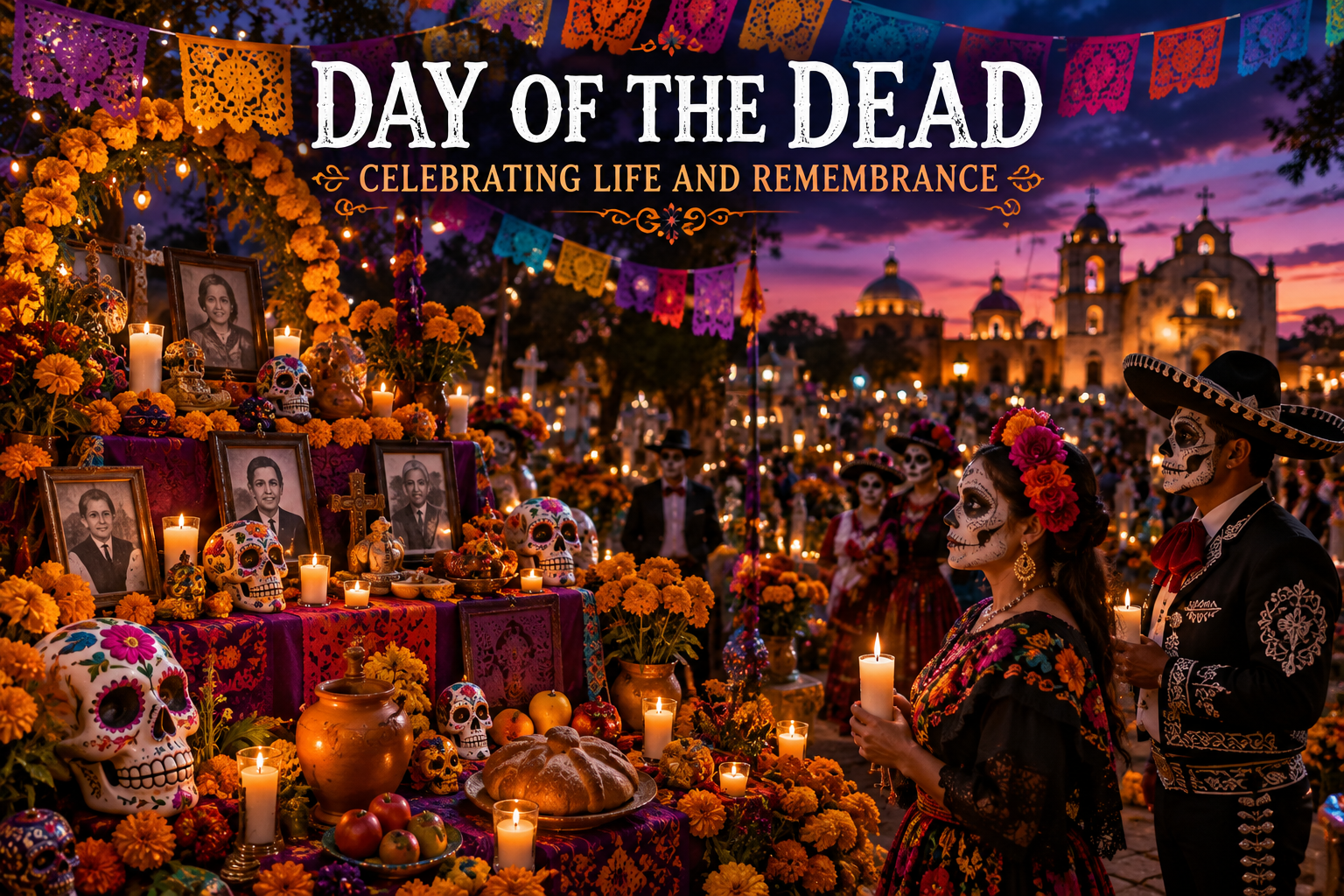
Day of the Dead Festival: Celebrating Life and Remembrance
Day of the Dead Festival: Celebrating Life and Remembrance – The Day of the Dead Festival, known in Spanish as Día de los Muertos, is one of Mexico’s most beloved and culturally significant celebrations. Unlike traditional mourning ceremonies, this vibrant festival is a joyful tribute to family members and friends who have passed away. Through colorful decorations, elaborate altars, music, food, and community gatherings, the Day of the Dead honors the memory of loved ones while celebrating the enduring connection between the living and the dead.
Recognized by UNESCO as an Intangible Cultural Heritage of Humanity, Día de los Muertos has become internationally famous for its unique blend of Indigenous traditions and Catholic influences. Every year, millions of people across Mexico and beyond participate in the festivities, creating a remarkable celebration that combines remembrance, spirituality, art, and culture.
The Origins of the Day of the Dead
The roots of the Day of the Dead stretch back thousands of years to the ancient civilizations of Mesoamerica. Indigenous peoples such as the Aztecs, Maya, Purepecha, and Nahua believed that death was not the end of life but rather a continuation of the soul’s journey.
Among the Aztecs, ceremonies honoring deceased ancestors were common and often lasted for extended periods. These rituals were dedicated to deities associated with death and the afterlife. Rather than viewing death with fear, many Indigenous cultures regarded it as a natural part of existence.
When Spanish colonizers arrived in the sixteenth century, they introduced Catholic traditions such as All Saints’ Day and All Souls’ Day. Over time, Indigenous customs blended with Christian observances, creating the modern Day of the Dead celebration that exists today.
This cultural fusion resulted in a unique festival that reflects both Mexico’s Indigenous heritage and its colonial history.
When Is the Day of the Dead Celebrated?
The Day of the Dead is primarily celebrated on November 1 and November 2 each year.
November 1 is often dedicated to remembering deceased children and is sometimes referred to as Día de los Inocentes or Día de los Angelitos. November 2 is devoted to honoring deceased adults.
Although these are the official dates, preparations often begin weeks in advance. Families spend considerable time creating altars, decorating homes, preparing traditional foods, and organizing gatherings.
In many communities, the celebrations continue beyond the official dates through parades, cultural events, and artistic exhibitions.
The Meaning Behind the Celebration
At the heart of Día de los Muertos is the belief that the spirits of deceased loved ones return to visit the living during the festival. Families welcome these spirits with offerings, prayers, and celebrations designed to make them feel remembered and appreciated.
Rather than focusing on grief, the festival emphasizes love, memory, and continuity. It encourages people to celebrate the lives of those who have passed away and to preserve family traditions for future generations.
This perspective sets the Day of the Dead apart from many other commemorative events around the world. The atmosphere is often festive and colorful, reflecting the idea that death is a natural part of life rather than something to be feared.
The Importance of Ofrendas
One of the most recognizable traditions of the Day of the Dead is the creation of ofrendas, or altars.
Families build these altars in homes, cemeteries, schools, community centers, and public spaces. Ofrendas serve as symbolic invitations for the spirits of loved ones to return and enjoy the offerings prepared for them.
A typical altar may include:
- Photographs of deceased relatives
- Candles
- Marigold flowers (cempasúchil)
- Traditional foods
- Fruits and beverages
- Religious images
- Personal belongings
- Incense
- Decorative paper banners known as papel picado
Each item has symbolic meaning. Candles help guide spirits home, while marigold petals create pathways believed to lead the deceased to their families.
The beauty and creativity of these altars have become one of the festival’s most iconic features.
Marigolds: The Flower of the Dead
Marigolds play a central role in Day of the Dead celebrations. Their bright orange and yellow colors are believed to represent the sun, while their strong fragrance is thought to help guide spirits back to the world of the living.
Homes, altars, streets, and cemeteries are often decorated with thousands of marigold flowers. In some communities, petals are carefully arranged to create paths leading from doorways to family altars.
The flower has become one of the most recognizable symbols of Día de los Muertos and is frequently featured in artwork, photography, and festival decorations.
Traditional Foods and Treats
Food is an essential part of the celebration because it reflects the idea of sharing with returning spirits.
One of the most famous Day of the Dead foods is Pan de Muerto, or Bread of the Dead. This sweet bread is often decorated with dough shapes that symbolize bones and is enjoyed by families during the festival.
Other common foods include:
- Tamales
- Mole dishes
- Sugar skulls (calaveras de azúcar)
- Fruits and candies
- Traditional Mexican beverages
Many families prepare the favorite dishes of deceased relatives and place them on the altar as offerings.
These culinary traditions strengthen family connections while preserving recipes and customs that have been passed down through generations.
The Symbolism of Sugar Skulls
Sugar skulls are among the most famous images associated with the Day of the Dead.
These decorative skulls are often made from sugar, chocolate, or clay and are adorned with colorful icing, flowers, and patterns. Names of deceased relatives or living family members may be written on them.
Although skull imagery may appear unusual to outsiders, it serves as a reminder that death is a natural and universal part of life. The colorful and playful designs emphasize celebration rather than sorrow.
Today, sugar skulls have become an internationally recognized symbol of Mexican culture and Día de los Muertos.
Cemeteries Come Alive
During the Day of the Dead, cemeteries become important gathering places for families and communities.
Relatives visit gravesites to clean and decorate them with flowers, candles, and photographs. Many families spend hours or even entire nights at cemeteries sharing stories, music, food, and memories.
Far from being somber occasions, these gatherings often resemble family reunions. The atmosphere is filled with love, reflection, and gratitude for the lives of those being remembered.
This tradition highlights the festival’s core message: maintaining a connection with loved ones even after death.
Day of the Dead in Modern Mexico
Today, Día de los Muertos continues to evolve while preserving its traditional foundations.
Large cities such as Mexico City host elaborate parades featuring giant puppets, artistic floats, traditional costumes, and cultural performances. Museums, schools, and cultural institutions organize exhibitions and educational programs related to the festival.
The popularity of the celebration has also grown internationally. Communities in the United States, Canada, Europe, and other regions now hold Day of the Dead events that celebrate Mexican heritage and culture.
Despite its global expansion, the festival remains deeply connected to its origins and continues to play a vital role in Mexican identity.
UNESCO Recognition and Cultural Importance
In 2008, UNESCO recognized the Indigenous Festivity Dedicated to the Dead as part of the Representative List of the Intangible Cultural Heritage of Humanity.
This recognition highlighted the festival’s importance as a cultural tradition that promotes social cohesion, intergenerational knowledge transfer, and community identity.
The Day of the Dead is more than a festival; it is a living cultural practice that preserves centuries of history, beliefs, and artistic expression.
Through its rituals, music, food, and symbolism, the celebration continues to unite families and communities while honoring the memory of those who came before.
Why the Day of the Dead Continues to Inspire
The enduring popularity of Día de los Muertos lies in its powerful message about love, memory, and human connection.
The festival reminds people that remembering loved ones is an important part of life. It encourages families to share stories, preserve traditions, and celebrate the impact that previous generations have had on their lives.
Its vibrant colors, artistic beauty, and positive perspective on remembrance have resonated with people around the world, making it one of the most admired cultural celebrations on the planet.
Conclusion
The Day of the Dead Festival is a remarkable expression of Mexican culture, history, and spirituality. Through colorful altars, marigold flowers, traditional foods, music, and family gatherings, it transforms remembrance into a joyful celebration of life.
As millions of people come together each year to honor their ancestors and loved ones, Día de los Muertos continues to demonstrate that memory can be a source of comfort, connection, and celebration. It is a festival that not only preserves the past but also strengthens the bonds that unite families and communities across generations.