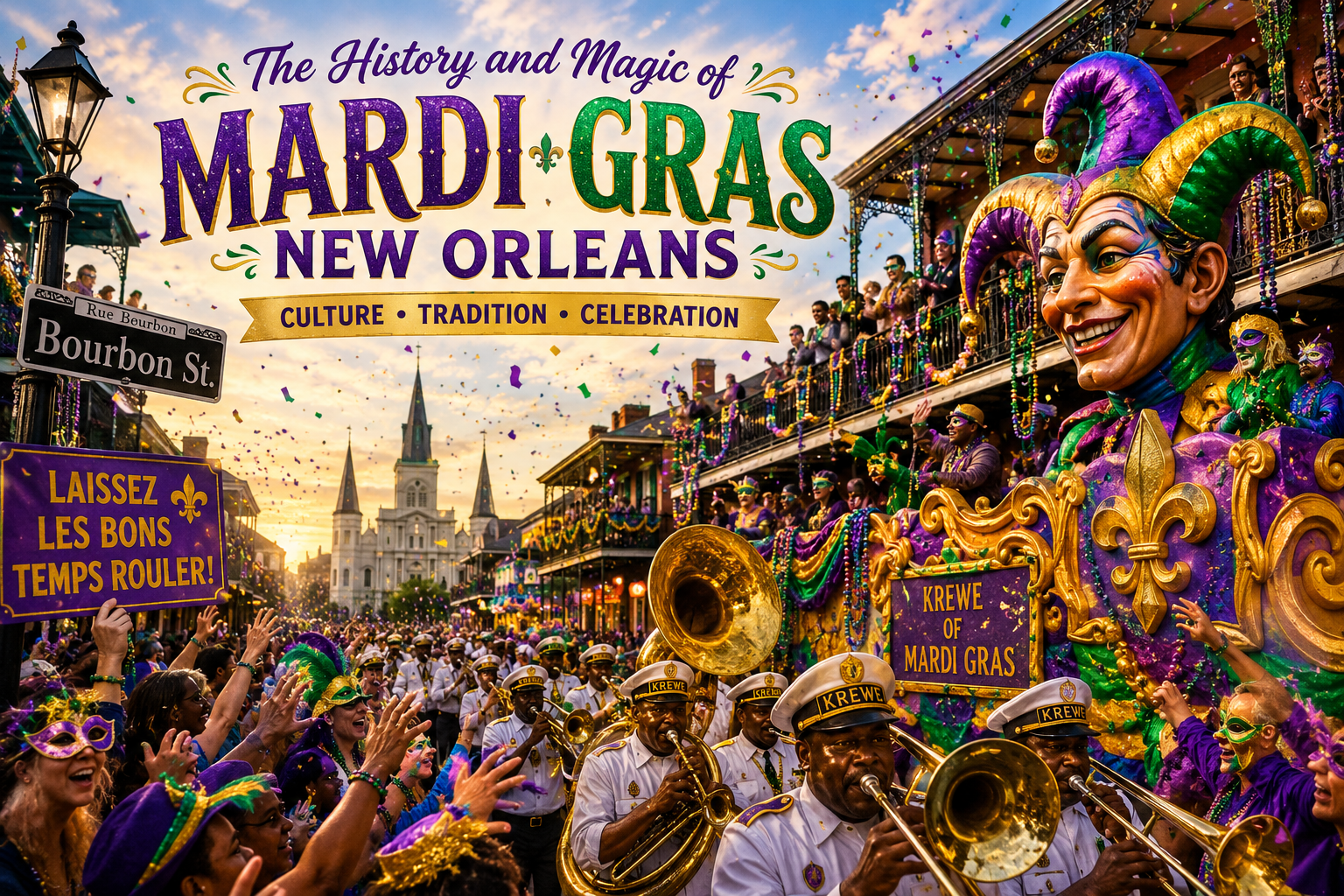
The History and Magic of Mardi Gras New Orleans
The History and Magic of Mardi Gras New Orleans – Few celebrations in the world combine history, culture, music, art, and community quite like Mardi Gras in New Orleans. Known as America’s most famous carnival, Mardi Gras transforms the city into a vibrant spectacle of colorful parades, elaborate costumes, lively music, and unforgettable traditions. Every year, millions of visitors travel to Louisiana to experience the excitement of this iconic festival, which has become a symbol of New Orleans itself.
Yet Mardi Gras is much more than a giant party. Behind the beads, masks, and floats lies a rich history that stretches back centuries and reflects the diverse cultural influences that shaped New Orleans. Understanding that history makes the celebration even more magical.
The Origins of Mardi Gras
The roots of Mardi Gras can be traced back to medieval Europe. The tradition evolved through celebrations in Rome and Venice before being brought to the French colonies in North America. The term “Mardi Gras” translates to “Fat Tuesday,” referring to the final day of feasting before the Christian season of Lent begins on Ash Wednesday.
The festival arrived in the Gulf Coast region with French explorers. In 1699, French-Canadian explorer Jean Baptiste Le Moyne Sieur de Bienville landed near present-day Louisiana and named the location “Pointe du Mardi Gras” because it was the eve of the traditional holiday. Early French settlements in the region celebrated Mardi Gras long before New Orleans became the center of the festivities.
New Orleans itself was founded in 1718, and by the 1730s residents were openly celebrating Mardi Gras. However, these early celebrations looked very different from the massive parades and elaborate floats that people know today. The festivities mainly consisted of masked balls, social gatherings, and community feasts.
The Birth of New Orleans Carnival
The modern version of Mardi Gras began taking shape during the nineteenth century. By the late 1830s, New Orleans residents were organizing public processions featuring masked participants, horse-drawn carriages, and torchlit parades. These early celebrations established many traditions that continue today.
A major turning point occurred in 1857 when the Mistick Krewe of Comus organized one of the city’s first large-scale Mardi Gras parades. The group introduced themed floats, secret societies, and organized pageantry that elevated the festival into a sophisticated public spectacle. Their influence helped create the parade culture that remains central to Mardi Gras.
Over time, other organizations known as “krewes” emerged. These social clubs became responsible for organizing parades, balls, and various Carnival events. Today, dozens of krewes participate in Mardi Gras season, each contributing unique themes, traditions, and artistic designs.
The Meaning Behind the Famous Colors
One of the most recognizable aspects of Mardi Gras is its signature color palette of purple, green, and gold. These colors appear everywhere during Carnival season, from decorations and costumes to king cakes and parade floats.
The colors were officially adopted by the Krewe of Rex in 1872. Each color carries symbolic meaning:
- Purple represents justice.
- Green symbolizes faith.
- Gold signifies power.
These colors have become internationally associated with Mardi Gras and help create the festival’s distinctive visual identity.
The Spectacular World of Krewes
Krewes are the heart of Mardi Gras. These organizations spend months planning elaborate parades and celebrations. Some of the most famous include Rex, Zulu, Bacchus, Endymion, and Muses.
Each krewe develops a unique annual theme and creates massive floats featuring artwork, satire, storytelling, and cultural references. Members ride on the floats, throwing souvenirs known as “throws” to excited spectators lining the streets.
The creativity displayed by these krewes transforms New Orleans into a giant outdoor art gallery. Floats often feature giant sculptures, animated figures, dazzling lights, and intricate decorations that require months of work to complete.
For many residents, participation in a krewe is a cherished tradition passed down through generations.
The Tradition of Beads and Throws
No symbol of Mardi Gras is more famous than colorful beads flying through the air during a parade. Visitors often arrive with empty bags and leave carrying large collections of beads, cups, coins, toys, and other keepsakes.
The tradition of throwing items from floats dates back to the nineteenth century. Over the years, krewes developed increasingly creative souvenirs. Today, some of the most sought-after items include hand-decorated cups, specialty coins known as doubloons, and unique handmade throws created specifically for certain parades.
Catching a special throw has become part of the Mardi Gras experience and contributes to the excitement that fills parade routes throughout the city.
Masks, Costumes, and Mystery
Masks have always played an important role in Mardi Gras culture. Historically, they allowed participants to temporarily set aside social status and enjoy the festivities anonymously.
Today, masks remain a defining feature of Carnival season. Float riders are traditionally required to wear masks, and many attendees create elaborate costumes that reflect creativity, humor, or fantasy.
On Mardi Gras Day itself, the streets of New Orleans become a sea of colorful characters. Visitors may encounter kings, queens, jesters, pirates, musicians, and countless imaginative costumes that showcase the city’s artistic spirit.
The atmosphere encourages self-expression and celebrates individuality in a way that few festivals can match.
The Magic of King Cake
Another beloved Mardi Gras tradition is the king cake. This colorful pastry appears throughout Carnival season and has become one of the most recognizable symbols of the celebration.
Decorated with purple, green, and gold sugar, king cakes are enjoyed at parties, offices, schools, and family gatherings. Hidden inside each cake is a small baby figurine. According to tradition, whoever finds the baby is expected to bring the next king cake or host the next celebration.
The tradition dates back centuries and connects modern Mardi Gras celebrations to older European customs associated with Epiphany and Carnival.
For many locals, the arrival of king cakes signals the official beginning of Carnival season.
The Unique Culture of Mardi Gras Indians
One of the most fascinating traditions in New Orleans is the culture of the Mardi Gras Indians, also known as Black Masking Indians.
These groups emerged during the nineteenth century when African Americans were often excluded from mainstream Carnival organizations. They developed their own celebrations inspired by the historical relationships between Black communities and Native Americans who provided refuge to escaped slaves.
Mardi Gras Indian tribes create breathtaking hand-sewn suits covered in beads, feathers, and intricate artwork. Many costumes take an entire year to complete. During Mardi Gras, tribes gather to display their creations through music, dance, and ceremonial encounters.
Their presence adds another layer of cultural richness and historical significance to the festival.
Why Mardi Gras Feels Magical
What truly makes Mardi Gras special is the atmosphere that fills New Orleans during Carnival season.
The city comes alive with brass bands, street performers, decorated balconies, and community celebrations. Neighborhoods host gatherings, families watch parades together, and visitors become part of traditions that have existed for generations.
Unlike many modern festivals, Mardi Gras is deeply woven into the identity of the city. It is not merely an event; it is a cultural expression that reflects the history, diversity, creativity, and resilience of New Orleans.
The combination of history and celebration creates an experience that feels both timeless and exciting. Whether someone is enjoying a king cake, catching beads from a float, listening to a brass band, or watching a parade roll through the streets, they are participating in a tradition that has evolved over centuries.
Conclusion
Mardi Gras New Orleans is far more than a famous festival. It is a living cultural tradition rooted in European, African, Native American, and Creole influences. From its origins in seventeenth-century Carnival celebrations to today’s world-famous parades and krewes, Mardi Gras has become one of the most extraordinary cultural events in the United States.
Its colorful traditions, artistic creativity, rich history, and welcoming spirit continue to attract visitors from around the globe. For anyone seeking a celebration filled with culture, excitement, and unforgettable memories, the magic of Mardi Gras New Orleans remains unmatched.