Holi Festival Traditions and Colors Across India
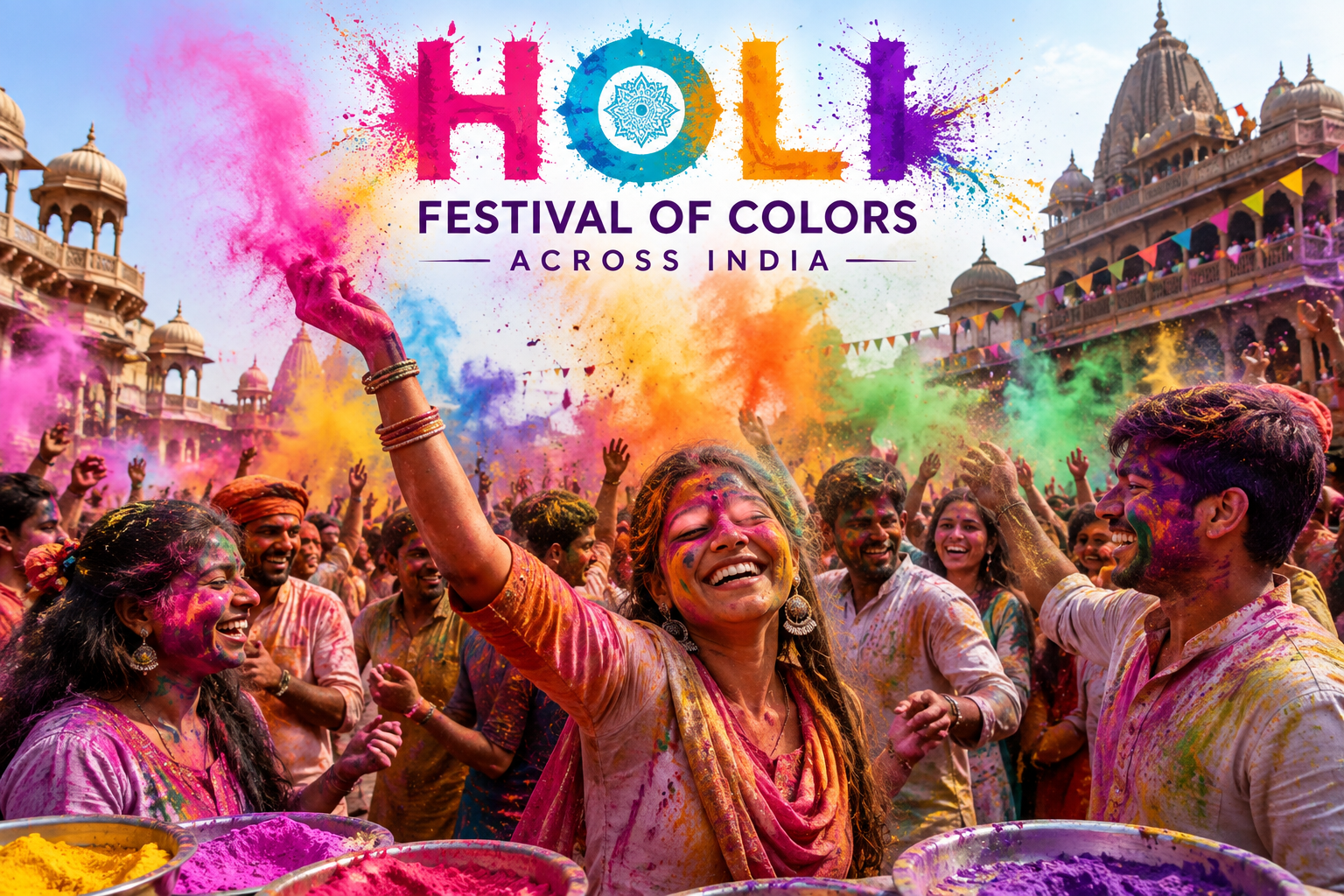
Holi Festival Traditions and Colors Across India – Holi is one of the most vibrant and widely celebrated festivals in India. Known around the world as the Festival of Colors, Holi represents joy, renewal, unity, and the triumph of good over evil. Every year, millions of people gather in streets, temples, parks, and villages to celebrate with colorful powders, music, dancing, traditional foods, and cultural rituals that have been passed down through generations.
While Holi has gained international popularity and is now celebrated in many countries, its roots remain deeply connected to Indian culture, spirituality, and history. Across India, different regions observe Holi in unique ways, reflecting local traditions and customs while maintaining the festival’s core message of togetherness and happiness.
This colorful celebration is more than just throwing powdered colors into the air. Holi is a cultural event that brings families, friends, and communities together, creating unforgettable experiences filled with laughter and positive energy.
The Origins of Holi
The history of Holi dates back thousands of years and is closely linked to Hindu mythology. One of the most famous legends associated with the festival is the story of Prahlad and Holika.
According to tradition, Prahlad was a devoted follower of Lord Vishnu. His father, King Hiranyakashipu, demanded that everyone worship him instead of the gods. When Prahlad refused, the king attempted several times to harm him. Eventually, Hiranyakashipu enlisted the help of his sister Holika, who possessed a magical cloak that protected her from fire.
Holika sat in a blazing fire with Prahlad, expecting him to perish. However, through divine protection, Prahlad survived while Holika was consumed by the flames. This story symbolizes the victory of good over evil and remains a central theme of Holi celebrations.
The night before Holi, many communities light large bonfires known as Holika Dahan to commemorate this event. Families gather around the fires to pray, celebrate, and mark the beginning of the festival.
The Meaning Behind the Colors
The colorful powders used during Holi are one of the festival’s most recognizable features. These bright colors carry symbolic meanings that reflect various aspects of life and nature.
Red often symbolizes love, passion, and fertility. Yellow is associated with knowledge, happiness, and turmeric, a sacred ingredient in Indian culture. Green represents new beginnings, growth, and harmony with nature. Blue is linked to Lord Krishna, one of Hinduism’s most beloved deities, while pink and purple symbolize joy, creativity, and celebration.
When people throw colors at one another, social barriers often disappear. During Holi, distinctions based on age, status, occupation, or background become less important as everyone joins in the same joyful celebration. The act of sharing colors reflects unity, friendship, and mutual respect.
Holika Dahan and the Start of the Festival
The celebrations begin on the evening before the main Holi festivities with Holika Dahan.
Communities gather around large bonfires built in public spaces. Religious ceremonies are performed, prayers are offered, and families participate in rituals that symbolize the destruction of negative forces and the arrival of positive energy.
Many people walk around the fire, sing devotional songs, and offer grains, coconuts, or flowers as part of traditional customs. The flames represent purification and the triumph of righteousness.
Holika Dahan serves as an important spiritual reminder that challenges and negativity can be overcome through faith, courage, and goodness.
Rangwali Holi and the Festival of Colors
The day after Holika Dahan is known as Rangwali Holi, the most famous part of the celebration.
On this day, streets across India transform into colorful scenes of excitement and joy. People gather with gulal, the traditional colored powder used during the festival. Friends, relatives, neighbors, and even strangers playfully apply colors to one another while exchanging greetings and good wishes.
Music fills the air as people dance, sing, and celebrate together. Water balloons and colored water are commonly used, adding another layer of excitement to the festivities.
The atmosphere is energetic and welcoming. It is a time when people reconnect with friends, visit relatives, and strengthen community bonds. Many individuals who have experienced disagreements during the year use Holi as an opportunity for reconciliation and fresh beginnings.
The Connection Between Holi and Lord Krishna
Another important aspect of Holi is its connection to Lord Krishna.
According to legend, Krishna was concerned about his dark complexion compared to the fair skin of Radha. His mother suggested that he playfully apply color to Radha’s face. This playful act became associated with Holi and contributed to the festival’s colorful traditions.
The regions of Mathura and Vrindavan, where Krishna spent much of his childhood, host some of the most famous Holi celebrations in India. Thousands of pilgrims and visitors travel to these locations every year to participate in elaborate festivities that honor Krishna’s life and teachings.
The celebrations often include devotional singing, dancing, temple ceremonies, and reenactments of stories from Krishna’s childhood.
Unique Holi Traditions Across India
One of the reasons Holi remains such a fascinating cultural festival is the diversity of traditions found throughout India.
Lathmar Holi in Uttar Pradesh
In the towns of Barsana and Nandgaon, Holi is celebrated through a unique tradition known as Lathmar Holi.
According to local folklore, this custom commemorates Krishna’s visits to Radha’s village. During the celebration, women playfully chase men with sticks while the men attempt to shield themselves. The event attracts large crowds and has become one of India’s most famous Holi traditions.
Phoolon Ki Holi
In Vrindavan, a special version of Holi known as Phoolon Ki Holi is celebrated using flower petals instead of colored powders.
Temples shower visitors with fragrant petals, creating a visually stunning and spiritually uplifting experience. This tradition highlights the devotional aspect of the festival and attracts visitors from around the world.
Royal Holi in Rajasthan
Several cities in Rajasthan host grand Holi celebrations featuring traditional folk performances, cultural programs, music, and royal processions.
The celebrations often take place in historic palaces and forts, providing visitors with an opportunity to experience India’s rich heritage alongside the festival.
Shantiniketan Holi in West Bengal
Inspired by Nobel Prize-winning poet Rabindranath Tagore, the Holi celebrations at Shantiniketan combine art, music, dance, and culture.
Students wear colorful traditional clothing and perform cultural programs that showcase the artistic spirit of the region.
Traditional Foods Enjoyed During Holi
Food plays an important role in Holi celebrations.
Families prepare a variety of traditional dishes that are shared with guests and neighbors. One of the most popular treats is gujiya, a sweet pastry filled with nuts, coconut, and dried fruits.
Other common Holi foods include:
- Malpua, a sweet pancake-like dessert
- Dahi Bhalla, lentil dumplings served with yogurt
- Puran Poli, a sweet flatbread
- Kachori, a savory snack
- Jalebi, a syrup-soaked sweet
Many households spend days preparing special meals for the festival, emphasizing hospitality and community spirit.
Sharing food strengthens social connections and reflects the generosity associated with Holi.
Holi as a Celebration of Spring
Holi also marks the arrival of spring and the end of winter.
The festival coincides with a period when flowers bloom, crops mature, and nature begins to flourish. In agricultural communities, Holi is often linked to gratitude for a successful harvest and hopes for future prosperity.
The bright colors used during the festival reflect the beauty and abundance of the natural world. This seasonal connection helps explain why Holi is often viewed as a celebration of renewal and optimism.
The arrival of spring serves as a reminder that life continually offers opportunities for growth and fresh beginnings.
Holi Around the World
As Indian communities have spread across the globe, Holi has become an international cultural event.
Today, Holi celebrations can be found in countries including the United States, Canada, the United Kingdom, Australia, South Africa, Singapore, and many others.
Many cities organize public festivals featuring music, dancing, cultural performances, and color-throwing events inspired by traditional Holi customs. These celebrations help introduce Indian culture to new audiences while allowing diaspora communities to maintain their cultural heritage.
The universal themes of joy, friendship, and inclusion have contributed to Holi’s growing popularity worldwide.
The Cultural Importance of Holi Today
In modern society, Holi continues to serve as an important cultural and social event.
The festival encourages people to step away from daily routines and focus on human connections. It promotes forgiveness, understanding, and unity among individuals from different backgrounds.
Holi also highlights the importance of preserving cultural traditions in an increasingly globalized world. By participating in the festival, younger generations learn about their heritage while sharing these traditions with others.
At the same time, Holi continues to evolve, incorporating modern celebrations while remaining rooted in its historical and spiritual foundations.
Conclusion
Holi Festival traditions and colors across India reflect centuries of history, mythology, spirituality, and cultural diversity. From the symbolic bonfires of Holika Dahan to the joyful color-filled celebrations of Rangwali Holi, the festival offers a unique blend of meaning and excitement.
Whether celebrated in the temples of Vrindavan, the streets of Mumbai, the villages of Uttar Pradesh, or cities around the world, Holi remains a powerful symbol of renewal, unity, and happiness. Its vibrant colors remind people of the beauty of diversity, while its traditions emphasize the timeless values of friendship, compassion, and hope.
As one of India’s most beloved cultural festivals, Holi continues to inspire millions of people every year, bringing communities together in a celebration that transcends age, language, and borders.