Discover the Magic of Carnaval de Barranquilla
Discover the Magic of Carnaval de Barranquilla – When people think of world-famous carnivals, Rio de Janeiro often comes to mind first. However, Colombia is home to a celebration that is just as vibrant, culturally rich, and unforgettable: the Carnaval de Barranquilla. Held annually in the Caribbean city of Barranquilla, this spectacular festival is one of the largest and most important cultural events in Latin America. Recognized by UNESCO as an Intangible Cultural Heritage of Humanity, the carnival represents a remarkable blend of Indigenous, African, and European traditions that have shaped Colombian culture for centuries.
Known for its colorful parades, lively music, traditional dances, elaborate costumes, and joyful atmosphere, Carnaval de Barranquilla attracts hundreds of thousands of visitors every year. For four exciting days before Lent, the city transforms into a giant stage where culture, creativity, and community take center stage.
The Origins of Carnaval de Barranquilla
The roots of Carnaval de Barranquilla stretch back hundreds of years. Historians believe the festival evolved from European carnival traditions brought to the Americas by Spanish colonizers. Over time, these celebrations merged with the customs, music, and rituals of Indigenous peoples and African communities, creating a unique cultural expression found nowhere else in the world.
Barranquilla’s location on Colombia’s Caribbean coast played a significant role in shaping the carnival. As an important trading center, the city became a meeting point for different cultures and traditions. The result was a vibrant cultural exchange that influenced music, dance, costumes, and folklore, all of which remain central to the festival today.
The carnival has become so culturally significant that UNESCO first proclaimed it a Masterpiece of the Oral and Intangible Heritage of Humanity in 2003, and it was later inscribed on UNESCO’s Representative List of Intangible Cultural Heritage in 2008.
A Celebration of Cultural Diversity
One of the most fascinating aspects of Carnaval de Barranquilla is its extraordinary cultural diversity. The festival serves as a living example of Colombia’s multicultural heritage, bringing together traditions from different ethnic and historical backgrounds.
African influences can be seen in energetic drum rhythms and dances such as Congo. Indigenous traditions are reflected in costumes, storytelling, and ceremonial performances. European influences appear in parade structures, masquerades, and carnival customs inherited from Spanish celebrations.
This blending of cultures has created a festival that celebrates unity through diversity. Participants proudly showcase their heritage while contributing to a shared cultural experience that belongs to the entire community.
The Famous Battle of the Flowers
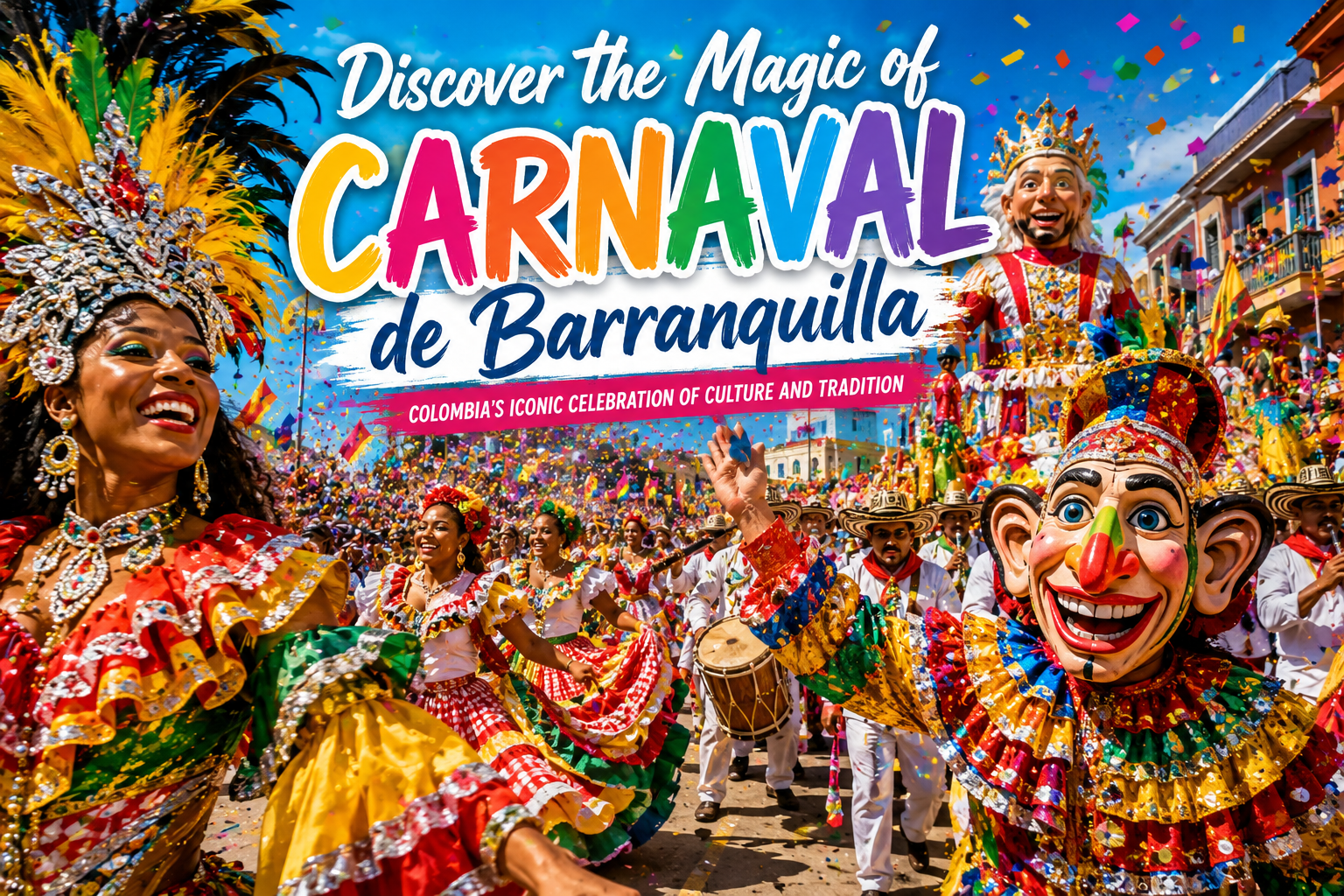
One of the most anticipated events of Carnaval de Barranquilla is the Batalla de Flores, or Battle of the Flowers. This grand parade officially opens the carnival and features spectacular floats, traditional dance groups, musicians, and costumed performers.
The streets fill with excitement as elaborately decorated floats roll through the city. Performers dance to the sounds of cumbia, mapalé, porro, and other traditional Caribbean rhythms. The parade is a visual feast, combining vibrant colors, artistic creativity, and cultural storytelling.
Unlike a competition, the Battle of the Flowers focuses on celebration and cultural expression. It offers visitors an incredible opportunity to witness the rich traditions of Colombia’s Caribbean region in a single event.
Traditional Dances and Music
Music and dance are at the heart of Carnaval de Barranquilla. Throughout the festival, countless groups perform traditional styles that have been passed down through generations.
Cumbia is perhaps the most recognizable musical genre associated with the carnival. Combining Indigenous, African, and European influences, cumbia reflects the cultural fusion that defines the festival itself. Dancers dressed in traditional attire move gracefully to rhythmic drumbeats and melodic instruments.
Other popular performances include mapalé, garabato, son de negro, and Congo dances. Each style tells a story and represents different aspects of Colombia’s cultural history. Many of these traditions have survived for centuries thanks to the carnival’s role in preserving and promoting local heritage.
Traditional instruments such as drums, maracas, claves, and wind instruments create the distinctive sounds that echo throughout the city during the festivities.
Colorful Characters and Costumes
A defining feature of Carnaval de Barranquilla is its incredible array of characters and costumes. Participants spend months preparing elaborate outfits that represent folklore, history, satire, and fantasy.
One of the most iconic figures is Marimonda, a humorous character known for its oversized nose, floppy ears, and playful personality. Originally created as a satirical symbol, Marimonda has become one of the carnival’s most beloved traditions.
Other famous characters include King Momo, who symbolizes the spirit of celebration, and the Carnival Queen, who serves as the festival’s cultural ambassador. Their appearances at official events help maintain traditions while generating excitement among spectators.
Animal masks, handcrafted headpieces, and imaginative costumes further contribute to the carnival’s magical atmosphere. These artistic creations showcase the creativity and craftsmanship of local communities.
Community and Participation
What truly sets Carnaval de Barranquilla apart is the level of community involvement. Unlike many international festivals that focus primarily on tourism, this carnival remains deeply rooted in local culture.
Entire neighborhoods participate in preparations throughout the year. Families, dance groups, musicians, artisans, and cultural organizations work together to create costumes, rehearse performances, and organize events.
For residents, the carnival is more than entertainment—it is an expression of identity, history, and pride. The festival strengthens social bonds and helps preserve traditions for future generations.
Visitors often notice the welcoming nature of the celebration. Locals eagerly share stories, explain traditions, and invite guests to experience the spirit of the carnival firsthand.
The Symbolic Farewell of Joselito Carnaval
Like many great celebrations, Carnaval de Barranquilla eventually comes to an end. One of the festival’s most unique traditions is the symbolic funeral of Joselito Carnaval.
According to popular tradition, Joselito is a fictional character who represents the carnival itself. After days of nonstop celebration, he is ceremonially mourned on the final day, symbolizing the conclusion of the festivities and the beginning of the Lenten season. The playful farewell combines humor and emotion, creating a memorable ending to the event.
This tradition reflects the carnival’s ability to blend theatrical performance, folklore, and community participation into a single cultural experience.
Economic and Cultural Impact
Carnaval de Barranquilla is not only a cultural treasure but also a major economic engine. The festival generates significant revenue for hotels, restaurants, transportation providers, artisans, and local businesses.
The event creates employment opportunities for performers, costume designers, musicians, technicians, and vendors. As tourism continues to grow, the carnival plays an increasingly important role in supporting the regional economy.
Beyond its financial benefits, the festival helps preserve intangible cultural heritage. Through performances, workshops, and community involvement, traditional knowledge is passed from one generation to the next, ensuring that valuable cultural practices remain alive.
Why You Should Experience Carnaval de Barranquilla
For travelers seeking an authentic cultural experience, Carnaval de Barranquilla offers something truly special. Unlike many commercialized festivals, it remains deeply connected to local traditions and community participation.
Visitors can enjoy world-class parades, dance to infectious rhythms, admire extraordinary costumes, and learn about the diverse cultures that have shaped Colombia’s Caribbean coast. Every street, performance, and celebration tells a story that contributes to the festival’s unique character.
Whether you are passionate about music, history, dance, photography, or cultural exploration, the carnival provides endless opportunities for discovery and enjoyment.
Conclusion
Carnaval de Barranquilla is far more than a festival—it is a living celebration of Colombia’s history, diversity, creativity, and spirit. Through its colorful parades, traditional music, vibrant costumes, and strong community roots, it continues to captivate visitors from around the world.
As a UNESCO-recognized cultural treasure, the carnival stands as one of Latin America’s most remarkable events. Anyone fortunate enough to experience it will quickly understand why locals proudly say that those who truly live the carnival are the ones who truly enjoy it.