Diwali Festival Celebrations and Cultural Meaning
Diwali Festival Celebrations and Cultural Meaning – The Diwali Festival is one of the most important and widely celebrated cultural and religious festivals in the world. Known as the Festival of Lights, Diwali symbolizes the triumph of light over darkness, good over evil, and knowledge over ignorance. Every year, millions of people across India and around the globe participate in vibrant celebrations that include lighting lamps, decorating homes, exchanging gifts, enjoying festive meals, and gathering with family and friends.
Although deeply rooted in Indian traditions, the Diwali Festival has become a global cultural event celebrated by diverse communities in countries such as the United States, Canada, the United Kingdom, Australia, Singapore, Malaysia, and South Africa. Its universal message of hope, renewal, prosperity, and unity continues to resonate with people from different backgrounds and cultures.
The festival is much more than a single day of celebration. It is a multi-day event filled with traditions, rituals, and cultural practices that have been passed down through generations. Understanding the history and meaning behind Diwali helps explain why it remains one of the world’s most beloved festivals.
The Origins of the Diwali Festival
The origins of the Diwali Festival can be traced back thousands of years and are connected to several religious traditions and historical stories.
One of the most widely known legends comes from the Hindu epic Ramayana. According to the story, Lord Rama returned to his kingdom of Ayodhya after fourteen years of exile and after defeating the demon king Ravana. The people of Ayodhya welcomed Rama, his wife Sita, and his brother Lakshmana by lighting rows of oil lamps known as diyas to illuminate their path home.
This event symbolizes the victory of righteousness over evil and remains one of the central themes of Diwali.
Different regions of India also associate Diwali with other religious stories. Some celebrate the victory of Lord Krishna over the demon Narakasura, while others honor Goddess Lakshmi, the deity of wealth and prosperity. In Jainism, Diwali marks the attainment of spiritual enlightenment by Lord Mahavira. Sikhs commemorate Bandi Chhor Divas, a significant event involving the release of Guru Hargobind Ji from imprisonment.
These diverse traditions demonstrate how the Diwali Festival has evolved into a celebration that transcends religious boundaries while preserving its core message of hope and renewal.
Why Diwali Is Called the Festival of Lights
The most recognizable symbol of the Diwali Festival is light.
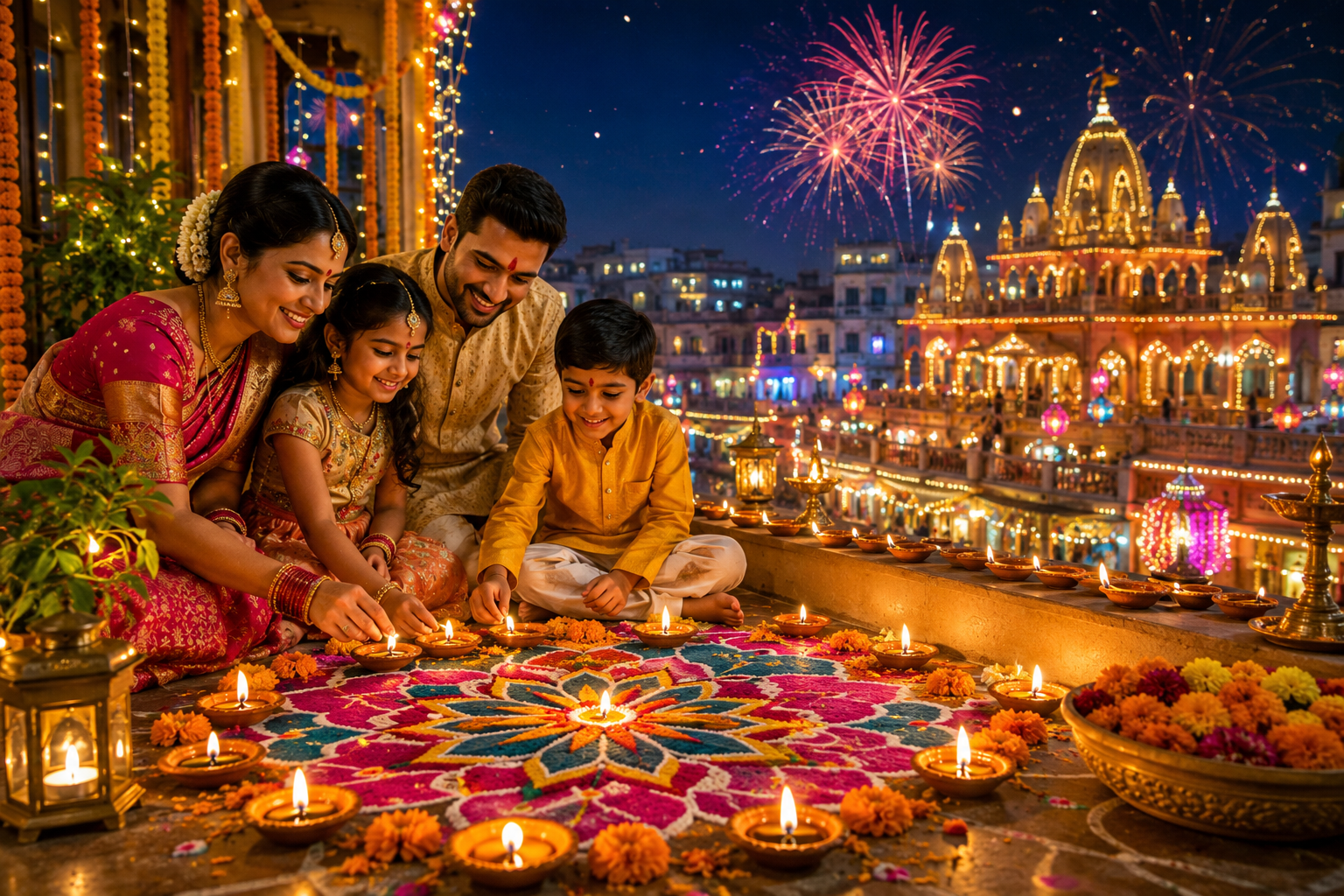
Homes, temples, businesses, and public spaces are illuminated with thousands of diyas, candles, lanterns, and decorative lights. The act of lighting lamps represents the removal of darkness and negativity from one’s life.
Light is viewed as a symbol of wisdom, truth, positivity, and spiritual awakening. During Diwali, people seek to invite prosperity, happiness, and success into their homes and communities.
The dazzling displays of lights create a magical atmosphere that transforms cities, villages, and neighborhoods throughout India. Streets glow with colorful decorations, and homes become showcases of creativity and festive spirit.
This visual beauty is one of the reasons why Diwali has captured global attention and become one of the most photographed cultural festivals in the world.
The Five Days of the Diwali Festival
In many parts of India, the Diwali Festival is celebrated over five days, with each day carrying its own significance.
Day One: Dhanteras
Dhanteras marks the beginning of the festivities. It is considered an auspicious day for purchasing gold, silver, household items, and new possessions.
Many families clean and decorate their homes in preparation for the main celebrations. Businesses often perform special prayers seeking prosperity and success for the coming year.
Day Two: Naraka Chaturdashi
Also known as Choti Diwali, this day commemorates the victory of Lord Krishna over the demon Narakasura.
People wake early, perform cleansing rituals, and decorate their homes with lights and colorful designs known as rangoli.
Day Three: Lakshmi Puja
The third day is the main day of Diwali and the most significant part of the festival.
Families gather to worship Goddess Lakshmi and Lord Ganesha. Homes are illuminated with diyas, and prayers are offered for wealth, prosperity, wisdom, and good fortune.
The evening often includes fireworks, festive meals, and the exchange of gifts.
Day Four: Govardhan Puja
In many regions, the fourth day honors Lord Krishna’s lifting of Govardhan Hill to protect villagers from severe storms.
Special food offerings and community celebrations are organized to commemorate the event.
Day Five: Bhai Dooj
The final day celebrates the bond between brothers and sisters.
Sisters pray for their brothers’ well-being and prosperity, while brothers express gratitude and offer gifts in return. The day highlights the importance of family relationships and mutual support.
Traditional Diwali Decorations
Decorations play an important role in Diwali Festival celebrations.
One of the most popular decorative traditions is the creation of rangoli. These intricate designs are made using colored powders, flower petals, rice, or sand and are placed at entrances to welcome guests and invite positive energy.
Doorways are often adorned with garlands made of marigold flowers and mango leaves. Homes are cleaned thoroughly before the festival, reflecting the belief that Goddess Lakshmi visits clean and well-maintained spaces.
Colorful lanterns, fairy lights, candles, and diyas add warmth and beauty to homes and public areas. The visual splendor of these decorations contributes significantly to the festive atmosphere.
The Importance of Family During Diwali
At its heart, the Diwali Festival is a celebration of family and togetherness.
Relatives often travel long distances to reunite during the holiday season. Families gather for prayers, meals, and social activities that strengthen relationships and create lasting memories.
The festival provides an opportunity for people to reconnect with loved ones, express gratitude, and share moments of joy. In today’s fast-paced world, these family-centered traditions remain one of the most meaningful aspects of Diwali.
Many people also use the occasion to seek forgiveness, resolve conflicts, and begin new chapters with a spirit of positivity and goodwill.
Diwali Foods and Festive Treats
Food is an essential part of Diwali celebrations.
Families prepare a wide variety of traditional dishes and sweets that are shared with relatives, friends, neighbors, and guests.
Popular Diwali sweets include:
- Ladoo
- Barfi
- Gulab Jamun
- Rasgulla
- Kaju Katli
- Jalebi
Savory snacks such as samosas, chakli, namak pare, and mathri are also commonly enjoyed during the festivities.
Preparing and sharing food reflects hospitality, generosity, and community spirit. Gift boxes filled with sweets have become a beloved Diwali tradition that symbolizes goodwill and friendship.
Gift Giving and Acts of Generosity
The exchange of gifts is another important element of the Diwali Festival.
Families, friends, colleagues, and business associates often exchange gifts as a gesture of appreciation and goodwill. Common gifts include sweets, chocolates, dry fruits, decorative items, clothing, and home accessories.
Many people also choose to support charitable causes during Diwali. Donations to those in need reflect the festival’s emphasis on compassion and social responsibility.
Acts of generosity reinforce the idea that prosperity is most meaningful when shared with others.
The Global Growth of the Diwali Festival
While Diwali originated in India, its influence has spread across the globe.
Large-scale celebrations are now held in cities such as London, New York, Toronto, Sydney, Kuala Lumpur, and Singapore. Public festivals often feature cultural performances, music, dance, food fairs, and spectacular light displays.
Governments and public institutions increasingly recognize Diwali as an important cultural event. Landmarks around the world are sometimes illuminated in honor of the festival, highlighting its growing international significance.
The widespread popularity of Diwali reflects the universal appeal of its themes. People from various backgrounds are drawn to its messages of hope, peace, happiness, and community.
Diwali and Cultural Identity
For millions of people, the Diwali Festival serves as a powerful expression of cultural identity.
The festival helps preserve traditions, stories, values, and customs that connect individuals to their heritage. Younger generations learn about their history through participation in family rituals and community events.
At the same time, Diwali continues to evolve in modern society. New forms of celebration, digital greetings, and environmentally conscious practices have emerged while maintaining respect for traditional values.
This balance between tradition and innovation has helped ensure the continued relevance of Diwali in a rapidly changing world.
Environmental Awareness and Modern Celebrations
In recent years, there has been growing awareness about the environmental impact of certain Diwali practices, particularly fireworks.
Many communities now encourage eco-friendly celebrations that emphasize sustainable decorations, energy-efficient lighting, and environmentally responsible festivities.
The use of clay diyas, biodegradable decorations, and community-based celebrations reflects an effort to preserve the festival’s beauty while minimizing environmental impact.
These adaptations demonstrate how cultural traditions can evolve to address contemporary challenges while maintaining their essential meaning.
The Lasting Significance of Diwali
The enduring popularity of the Diwali Festival can be attributed to its powerful symbolism and timeless values.
The festival reminds people that light can overcome darkness, hope can overcome despair, and goodness can triumph over adversity. These themes remain relevant regardless of cultural background, religious affiliation, or geographical location.
Diwali encourages reflection, gratitude, generosity, and optimism. It serves as an annual reminder of the importance of family, community, and spiritual growth.
Its ability to unite people through shared celebrations has made it one of the most cherished festivals in the world.
Conclusion
The Diwali Festival is far more than a celebration of lights and decorations. It is a rich cultural tradition that embodies values of hope, prosperity, unity, and renewal. From its ancient origins and spiritual significance to its colorful modern celebrations, Diwali continues to inspire millions of people across the globe.
Whether observed through prayer, family gatherings, festive meals, gift exchanges, or the simple act of lighting a lamp, the festival offers a meaningful opportunity to celebrate the triumph of positivity over negativity.
As the glow of countless diyas illuminates homes and communities each year, the Diwali Festival continues to spread a message of peace, joy, and optimism that transcends borders and generations.