Why Oktoberfest Remains Germanys Biggest Celebration
Why Oktoberfest Remains Germanys Biggest Celebration – Every year, millions of people travel to Munich with one goal in mind: experiencing Oktoberfest. What began as a royal wedding celebration more than two centuries ago has grown into the largest folk festival in the world. Today, Oktoberfest is far more than a beer festival. It is a celebration of Bavarian culture, German traditions, music, food, and community that attracts visitors from every corner of the globe.
Despite changing travel trends and the rise of countless international festivals, Oktoberfest continues to hold a special place in global culture. Its unique combination of history, tradition, and entertainment has helped it remain Germany’s biggest celebration year after year.
The Origins of Oktoberfest
The story of Oktoberfest began in 1810 when Crown Prince Ludwig of Bavaria married Princess Therese of Saxe-Hildburghausen. To celebrate the royal wedding, citizens of Munich were invited to attend horse races and festivities on a field outside the city. The event was so successful that it was repeated the following year, eventually becoming an annual tradition.
The grounds where the original celebration took place were later named Theresienwiese, meaning “Therese’s Meadow,” in honor of the bride. To this day, locals still refer to Oktoberfest simply as “Wiesn.”
Over the decades, horse races were joined by agricultural exhibitions, carnival attractions, beer tents, and cultural performances. The festival evolved while preserving its Bavarian roots, creating a tradition that has endured for more than 200 years.
Oktoberfest – The Largest Folk Festival in the World
One of the biggest reasons Oktoberfest remains Germany’s premier celebration is its incredible scale. The festival regularly attracts around six million visitors, and some recent years have exceeded seven million attendees. Millions of liters of beer are served, and the event occupies a vast area of Munich’s Theresienwiese fairgrounds.
The size of Oktoberfest creates an atmosphere unlike any other festival. Massive beer tents, lively crowds, carnival rides, parades, and cultural events transform Munich into a global gathering place. Visitors experience the energy of a celebration that feels both local and international at the same time.
Its enormous attendance also demonstrates the festival’s enduring popularity. Even during periods of economic uncertainty, demand for Oktoberfest remains remarkably strong.
A Celebration of Bavarian Culture
Although beer often receives the most attention, Oktoberfest is fundamentally a celebration of Bavarian culture.
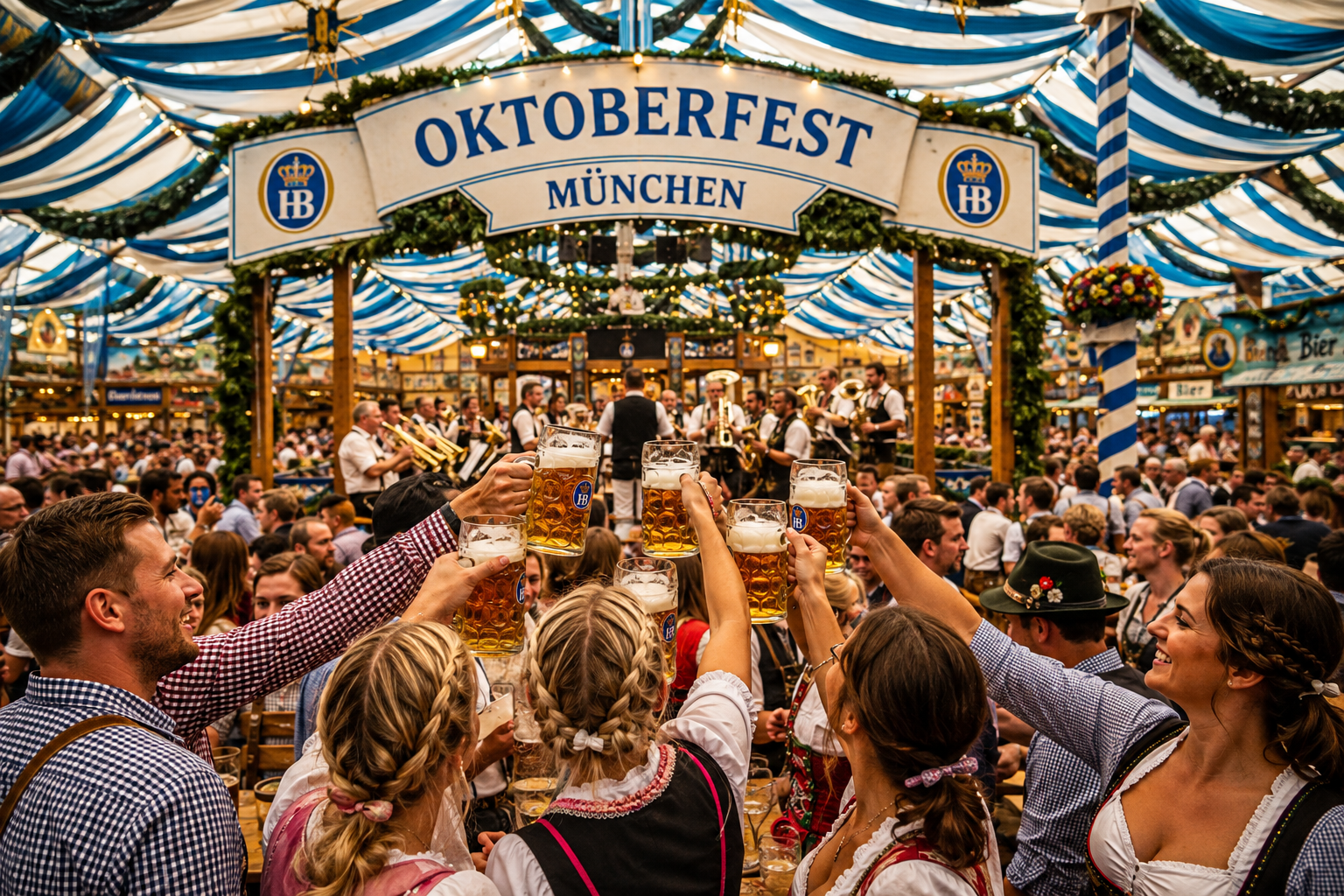
Traditional music fills the festival grounds as brass bands perform classic tunes that encourage singing and dancing. Visitors can enjoy folk performances, historical displays, and regional customs that have been preserved for generations. Bavarian hospitality is visible everywhere, creating a welcoming atmosphere for both locals and international guests.
Traditional clothing is another iconic feature of Oktoberfest. Many attendees wear lederhosen and dirndls, helping create a visual connection to Bavaria’s cultural heritage. While wearing traditional dress was not always common among visitors, it has become an important part of the modern Oktoberfest experience.
This strong cultural identity distinguishes Oktoberfest from many modern festivals, which often focus solely on entertainment.
World Famous Beer Tradition
No discussion of Oktoberfest would be complete without mentioning beer.
The festival is closely associated with Munich’s historic brewing tradition. Special Oktoberfest beers are produced specifically for the event by Munich breweries, following strict brewing standards and regional traditions. Large beer tents provide a unique environment where thousands of people gather to enjoy Bavarian hospitality together.
Yet beer is only one element of a much larger experience. Visitors come not only to drink but also to socialize, celebrate, and participate in a centuries-old cultural tradition. The communal atmosphere created inside the tents helps explain why many people return year after year.
Food That Defines the Festival
Food plays a major role in Oktoberfest’s continued popularity.
Visitors can enjoy traditional Bavarian dishes such as pretzels, sausages, roasted chicken, pork specialties, and regional desserts. These foods reflect local culinary traditions and complement the festive atmosphere.
For many travelers, Oktoberfest serves as an introduction to German cuisine. Sharing meals at long communal tables encourages conversation and strengthens the sense of community that defines the festival.
The combination of food, music, and tradition creates an experience that appeals even to visitors who are not interested in beer.
Family Friendly Attractions
Many people are surprised to learn that Oktoberfest is not exclusively an adult event.
The festival features amusement rides, games, parades, cultural exhibitions, and family-oriented activities. Organizers have introduced initiatives that make parts of the event more welcoming for families, including designated periods emphasizing traditional music and a calmer atmosphere.
Children and families can enjoy numerous attractions while experiencing Bavarian traditions firsthand. This broad appeal helps ensure that Oktoberfest remains relevant across generations.
Because the festival offers something for everyone, it attracts a much wider audience than many other large-scale celebrations.
A Powerful Economic and Tourism Engine
Oktoberfest is also an economic powerhouse for Munich and Germany.
Millions of visitors spend money on hotels, restaurants, transportation, shopping, and entertainment during the festival period. Studies and reports have estimated that Oktoberfest generates well over one billion euros in economic activity, supporting thousands of jobs and businesses.
The festival has become one of Germany’s most recognizable tourism brands. International travelers often plan entire vacations around attending Oktoberfest, helping strengthen Germany’s reputation as a cultural destination.
This economic impact provides additional motivation for preserving and promoting the festival for future generations.
A Truly Global Event
While Oktoberfest remains deeply Bavarian, its influence extends around the world.
Many cities now host their own Oktoberfest-inspired celebrations, but Munich remains the original and most prestigious destination. Visitors from dozens of countries travel to Germany specifically to experience the authentic festival.
The international character of Oktoberfest reflects its unique ability to bring people together across cultures. Guests who may not share the same language often find common ground through music, food, and celebration.
This global appeal has helped transform Oktoberfest into one of the most recognizable cultural events on Earth.
Tradition and Innovation Working Together
One reason Oktoberfest has survived for more than two centuries is its ability to evolve while respecting tradition.
The festival has adapted to changing social expectations, safety standards, and visitor needs without losing its core identity. Historic elements such as traditional music, parades, and Bavarian customs remain central to the event, while modern infrastructure and organization ensure a positive experience for millions of attendees.
This balance between heritage and innovation allows Oktoberfest to remain relevant in the modern era.
Conclusion
Oktoberfest remains Germany’s biggest celebration because it offers far more than beer. Its remarkable history, deep cultural roots, world-famous traditions, family-friendly attractions, economic significance, and international appeal have transformed it into a global phenomenon. From its origins as a royal wedding celebration in 1810 to its status as the world’s largest folk festival today, Oktoberfest continues to capture the imagination of millions.
For visitors, Oktoberfest represents an unforgettable opportunity to experience authentic Bavarian culture. For Germany, it stands as a symbol of tradition, community, and celebration. More than two centuries after it began, Oktoberfest remains one of the world’s greatest cultural festivals—and there is little sign that its popularity will fade anytime soon. (Simply Munich: The Official Travel Guide)