Celebrating Diversity: The Vibrant Festival of Diwali
Introduction to Diwali: The Festival of Lights
Diwali, also known as Deepavali, is one of the most significant festivals celebrated in India and by millions of people around the world. It is often referred to as the Festival of Lights due to its central theme of illuminating the darkness with the light of hope, joy, and prosperity. Spanning over five days, Diwali symbolizes the victory of good over evil and light over darkness, with each day signifying a different aspect of this profound message.
Traditionally, Diwali is celebrated by Hindus, Jains, Sikhs, and Buddhists, making it an inclusive occasion. The festival is marked by the lighting of oil lamps and candles, fireworks, vibrant decorations, and the exchange of gifts and sweets among family and friends. Diwali not only marks the end of the harvest season but also heralds the beginning of the New Year in various regions of India, further enhancing its cultural significance.
The festival’s origins are rooted in various mythological stories, commonly associated with the return of Lord Rama to Ayodhya after defeating the demon king Ravana, which is celebrated primarily by Hindus. Similarly, Jains commemorate the attainment of nirvana by Lord Mahavira, while Sikhs celebrate the release of Guru Hargobind Ji from prison. Buddhism also recognizes the occasion as a time of reflection and rejoicing.
Core themes of Diwali revolve around the importance of family, community, and charity. It encourages individuals to reflect on their actions, seek forgiveness, and resolve to strive for righteousness. Overall, Diwali brings together people of diverse backgrounds to celebrate unity, making it a shining representation of cultural diversity and harmony within society.
Historical Roots of Diwali
Diwali, often referred to as the Festival of Lights, carries rich historical roots that can be traced back to ancient texts and legends, particularly the Ramayana and the Mahabharata. The festival predominantly commemorates the return of Lord Rama, along with his wife Sita and brother Lakshmana, to their kingdom of Ayodhya after a fourteen-year exile. This event marks the triumph of good over evil, symbolizing the destruction of darkness and ignorance through the illumination of the heart and the mind.
In addition to its narrative from Hindu mythology, Diwali also finds mention in various cultural and religious contexts across India and other parts of the world. In Jainism, the festival marks the occasion of Lord Mahavira’s attainment of Nirvana, while for Sikhs, it is associated with the release of Guru Hargobind Ji from imprisonment. The plurality of interpretations highlights Diwali’s significance as a unifying celebration transcending specific religious boundaries.
Over the centuries, Diwali has evolved, absorbing influences from different cultures and regions. The customs and practices associated with the festival vary significantly; in North India, it is characterized by the lighting of diyas (oil lamps) and bursting of firecrackers, while in South India, people celebrate it as a harvest festival known as ‘Deepavali’, emphasizing the celebration of the harvest and family togetherness. Others in the West celebrate Diwali as an occasion to promote peace and goodwill, reflecting a more universal message of harmony.
Today, Diwali is recognized not only in India but globally, transcending its origins to become a celebration of diversity, inclusivity, and shared values. It is observed by millions across the world, illustrating the intricate relationship between tradition and contemporary practice. As such, its historical roots provide not only a glimpse into ancient beliefs but also an understanding of how these practices continue to resonate in the modern world.
Traditions and Rituals of Diwali
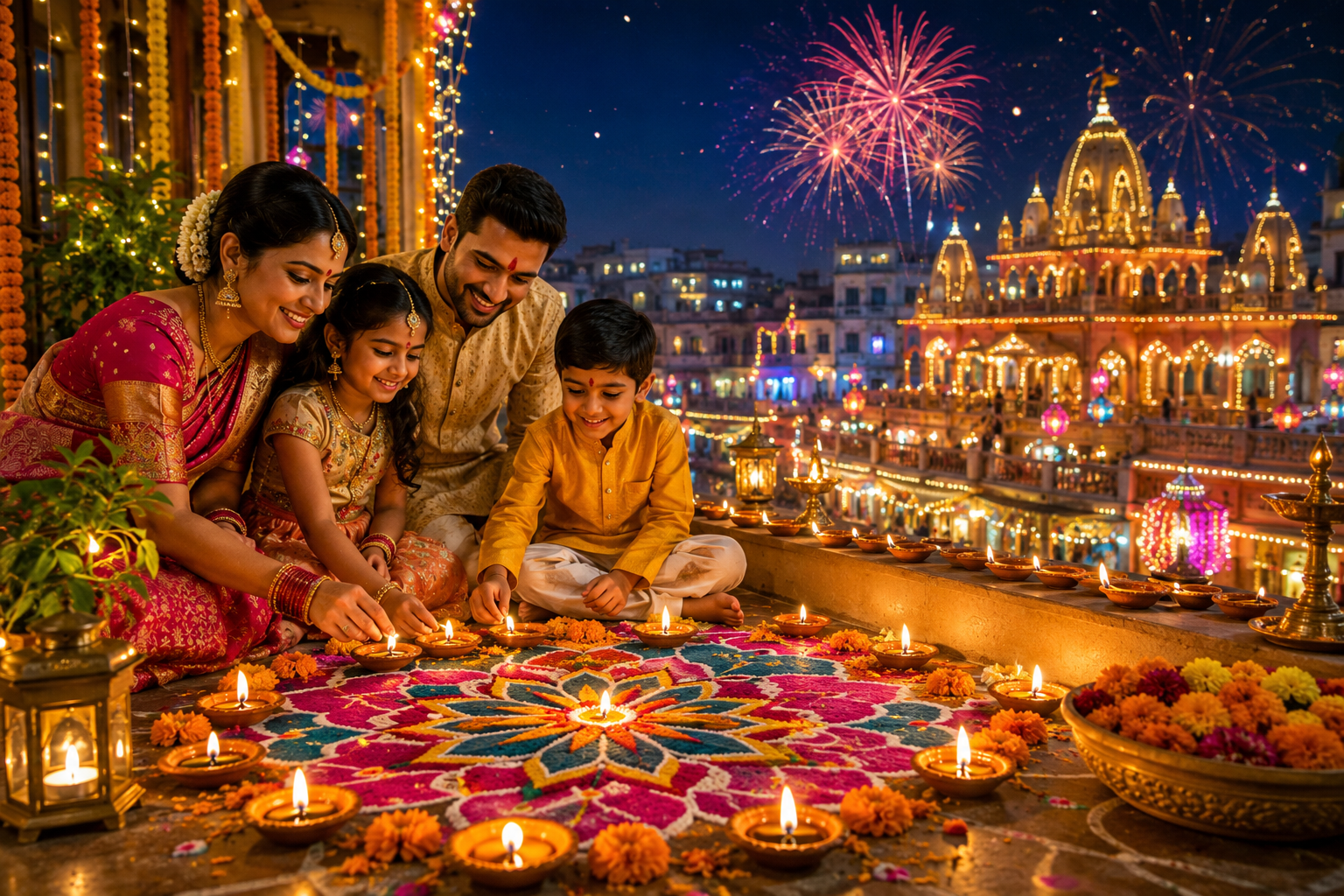
Diwali, also known as the Festival of Lights, encompasses a rich tapestry of traditions and rituals that vary across different regions, showcasing the cultural diversity of India and the Indian diaspora. One of the most significant traditions associated with this festival is Lakshmi Puja, which involves the worship of Goddess Lakshmi, the deity of wealth and prosperity. On the evening of Diwali, devotees clean their homes and often create decorative rangoli patterns at their entrances as a welcoming gesture for the goddess. During the puja, offerings of sweets, fruits, and flowers are made, and prayers are performed to invite prosperity into their households.
The lighting of diyas, or small oil lamps, is another pivotal ritual during Diwali. It symbolizes the triumph of light over darkness and knowledge over ignorance. Families illuminate their homes with these tiny lamps, creating a warm, inviting atmosphere. In many regions, the tradition extends to the use of decorative lamps and strings of lights, transforming cities and villages into a glowing spectacle. The act of lighting diyas is often imbued with spiritual significance, representing hope and renewal.
In addition to these practices, the bursting of fireworks has become synonymous with the festival. Fireworks are used to celebrate the victory of good over evil, as well as to mark the joyous occasion with sound and color. However, this tradition varies in acceptance, with growing awareness of environmental impacts prompting some communities to seek eco-friendly alternatives.
Each region of India contributes its unique flavor to the Diwali celebrations — whether through regional sweets, specific deities revered in worship, or unique customs and folklore. This diverse array of practices reflects the festival’s ability to unify various cultures under the shared theme of joy and light. Through these rituals and traditions, Diwali stands as a vibrant testament to the rich cultural heritage of India and the enduring spirit of its people.
Culinary Delights of Diwali
Diwali, known as the Festival of Lights, is not only a celebration of spiritual victory but also a time for enjoying a rich variety of culinary treats. The essence of this festival is intertwined with the preparation and sharing of food, particularly traditional sweets and savory snacks that hold significant cultural importance. One of the most beloved sweets served during Diwali is gulab jamun, which consists of deep-fried dough balls soaked in a fragrant sugar syrup. This delicacy symbolizes prosperity and is often shared with family and friends to embody the spirit of giving.
Another popular snack that graces the tables during this festive period is the samosa, a fried or baked pastry filled with a savory mixture of spiced potatoes, peas, or lentils. Samosas are commonly enjoyed as appetizers or during family gatherings, representing hospitality and togetherness. Alongside these treats, various other dishes such as kachoris, pakoras, and chivda are prepared, showcasing the diversity in regional cuisines associated with Diwali.
The act of feasting during Diwali goes beyond mere enjoyment; it reinforces bonds amongst families and communities. Many households dedicate the days leading up to the festival to cooking and preparing these delightful dishes, creating an atmosphere filled with joy and anticipation. Sharing food with neighbors or charitable donations of sweets to those in need during this time embodies the spirit of Diwali’s emphasis on generosity and gratitude.
For those looking to participate in these culinary traditions, simple recipes for gulab jamun and samosas are widely available. They often involve the use of readily available ingredients, promoting a sense of accessibility and involvement. Ultimately, the combination of vibrant flavors and the communal aspect of Diwali cuisine contributes to the festival’s celebratory aura.
The Sounds of Diwali: Music and Dance
Diwali, known as the Festival of Lights, is not only celebrated through the illumination of homes and public spaces but also brought to life through the vibrant sounds of music and dance. These elements are integral to the festivities, reflecting the rich cultural heritage of India. Traditional songs resonate throughout the festival, evoking a sense of joy and togetherness. Folk melodies and festive anthems inspire people to revel in the spirit of Diwali, serving as a backdrop to various rituals and celebrations.
The significance of music during Diwali transcends mere entertainment. It represents an expression of cultural identity and community bonding. Among the most popular traditional songs are devotional hymns that pay homage to deities, celebrating the triumph of light over darkness. Alongside these, popular Bollywood tracks also feature prominently at Diwali gatherings, bridging generations through shared musical experiences.
Dance, much like music, plays a pivotal role during Diwali celebrations. Various traditional Indian dance forms, such as Garba and Dandiya Raas, are commonly performed during the festival. Garba, a form of dance originating from Gujarat, involves rhythmic circular movements accompanied by traditional songs. Dandiya Raas involves the use of colorful sticks and is often performed in groups, creating an exhilarating atmosphere. These dances not only provide entertainment but also reinforce communal ties and celebrate cultural heritage.
Musical instruments such as the dholak, harmonium, and tabla are often used in Diwali performances, enhancing the festive ambience. The infectious beats of these instruments invite participants to join in the revelry, fostering a spirit of unity. The sounds of Diwali, with their harmonious blend of tradition and contemporary influences, embody the essence of the festival, encouraging everyone to celebrate diversity through art, music, and dance.
Silhouettes of Tradition: Clothing During Diwali
Diwali, known as the Festival of Lights, is celebrated not only for its spiritual significance but also for the vivid display of traditional clothing that adorns individuals during this festive season. Traditional attire serves as a reflection of cultural heritage, allowing participants to express their identity and pride through rich fabrics and vibrant colors.
For women, the sari remains the quintessential choice, symbolizing elegance and grace. The sari can vary widely in fabric, color, and style—from silk to cotton, and adorned with intricate embroidery or detailed embellishments. Colors play a significant role during Diwali; deep reds, brilliant yellows, and bright greens are commonly chosen, each hue representing joy, prosperity, and the festive spirit. Women often pair the sari with exquisite jewelry, such as bangles and earrings, which further enhances the celebratory appearance.
Meanwhile, men often opt for the kurta-pajama or dhoti, which are also steeped in tradition. The kurta, a long tunic, is typically worn over pajama pants and can be found in numerous designs and patterns, often reflecting celebratory themes in bright colors or handcrafted textiles. This attire not only embodies cultural significance but also fosters a sense of unity and pride amongst the wearers. Traditional craftsmanship is evident in the detailed stitching and unique patterns that often depict cultural narratives.
The clothing worn during Diwali is more than just a fashion statement; it is a testament to the rich tapestry of cultural diversity inherent in the Indian subcontinent. As families gather to celebrate with joy and feasting, these extended expressions of tradition through clothing resonate with the essence of the festival, melding personal identity with communal celebration.
Cultural Significance of Diwali
Diwali, known as the Festival of Lights, holds profound cultural significance across various communities, transcending geographical boundaries and embracing a rich tapestry of beliefs and traditions. At its core, Diwali symbolizes the victory of light over darkness and good over evil, encouraging a communal spirit of kinship and harmony. This celebration fosters unity, as families and friends come together to participate in rituals, share meals, and light lamps, reinforcing the precious bonds that knit society together.
The festival also serves as a profound reminder of the virtues of forgiveness and renewal. During Diwali, individuals are inspired to forgive past grievances, promoting a sense of peace and reconciliation that resonates deeply within families and communities. This act of release not only strengthens familial ties but also cultivates an atmosphere of understanding and compassion among participants, essential qualities in maintaining the fabric of a diverse society.
Moreover, Diwali’s cultural significance extends to instilling a sense of identity among individuals, particularly in multicultural settings. It provides an opportunity for communities to share their unique practices, stories, and foods with one another, fostering an environment where mutual respect and appreciation flourish. As festivals like Diwali become more inclusive, they encourage a blend of traditions, creating a rich cultural dialogue that celebrates both individual identities and collective harmony.
In essence, Diwali is not merely a religious observance; it is an emblem of communal strength, resilience, and the celebration of our shared humanity. By embracing the core values that Diwali represents, communities can work towards fostering understanding and collaboration while maintaining respect for cultural diversity. As such, Diwali becomes more than a festival—it transforms into a powerful agent of change, advocating unity amidst diversity.
Diwali Tourism Impact and Global Celebrations
The festival of Diwali, celebrated primarily by Hindus, Sikhs, and Jains, has grown to become a significant driver of tourism in India and beyond. In recent years, cities like Varanasi, Jaipur, and Mumbai have emerged as prime destinations where locals and tourists alike can experience the grandeur of Diwali celebrations. This annual event attracts visitors from around the globe, eager to witness the intricate rituals, vibrant decorations, and spectacular fireworks that characterize this auspicious occasion.
Tourism during Diwali not only stimulates local economies but also promotes cultural exchange. Many tourists participate in traditional practices, such as lighting diyas (oil lamps), exchanging sweets, and attending local festivals. This immersion in Diwali customs offers a unique opportunity for individuals to enhance their understanding of Indian culture. Furthermore, cities with significant Indian diasporas, including London, New York, and Sydney, have started hosting their own Diwali events, thereby extending the celebration far beyond its place of origin. These global observances bring communities together to share in the joy of the festival, fostering intercultural connections.
Educational opportunities surrounding Diwali also abound, particularly through workshops and guided tours that focus on the history and significance of the festival. Local organizations often collaborate with tourism boards to create informative sessions aimed at tourists. These initiatives not only highlight the importance of Diwali in Indian culture but also encourage respect and understanding between diverse communities. The rise of Diwali tourism has, therefore, become more than just an economic factor; it symbolizes a shared human experience that celebrates diversity and unity.
Modern Celebrations and Adaptations of Diwali
Diwali, known widely as the Festival of Lights, has undergone significant transformations in its celebrations, adapting to modern times while retaining its essence. This vibrant festival, which traditionally emphasizes the triumph of light over darkness, has embraced contemporary influences, most notably through technology and social media. As communities around the world pop up, Diwali celebrations are often showcased on platforms like Instagram, Facebook, and Twitter, allowing for a more global participation in festivities. This sharing of experiences not only enhances community engagement but also promotes cultural awareness among diverse populations.
The integration of technology has also introduced innovative practices into the celebrations. For instance, virtual events and online gatherings have become particularly popular, especially during the pandemic. Families can connect through live streams, sharing prayers, rituals, and festive meals with loved ones far and near. Moreover, mobile applications dedicated to Diwali provide insights and guidance on rituals, recipes, and décor ideas, ensuring that the festival remains accessible to everyone regardless of their geographic location or familiarity with the customs.
Despite these modern adaptations, the core values and traditions of Diwali remain significant. It is crucial for celebrations to respect and uphold cultural heritage, ensuring that the original meanings are not overshadowed by new trends. While it is essential to incorporate innovative ideas, it is equally important to instill a sense of tradition among younger generations. This balance of embracing change while respecting heritage contributes to the ongoing relevance of Diwali in contemporary society.
As the festival evolves, the essence of Diwali—unity, prosperity, and the celebration of goodness—continues to shine through. The blend of traditional and modern practices creates an enriched tapestry of celebration that bonds individuals, families, and communities across the globe, representing the true spirit of diversity.