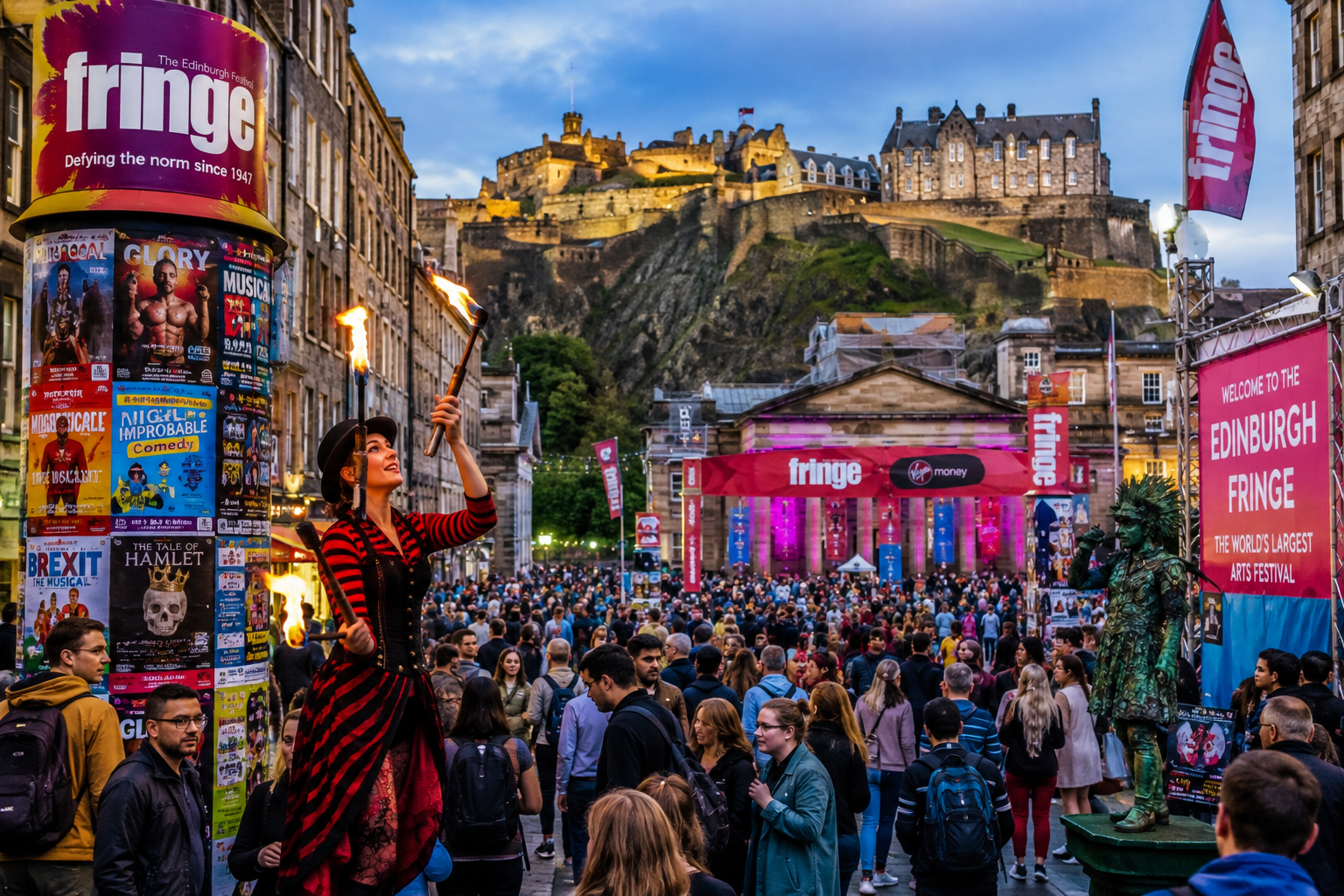
Edinburgh Fringe Festival and the World of Performing Arts
Edinburgh Fringe Festival and the World of Performing Arts – The Edinburgh Fringe Festival is widely recognized as the largest performing arts festival in the world. Every year, artists, performers, and audiences from across the globe gather in Scotland’s historic capital to celebrate creativity, innovation, and artistic expression. What began as a small, unofficial gathering of theater groups has evolved into a global cultural phenomenon that showcases thousands of performances spanning theater, comedy, dance, music, circus arts, spoken word, and experimental productions.
For performers, the Edinburgh Fringe Festival represents an unparalleled opportunity to present their work to international audiences. For visitors, it offers a chance to experience an extraordinary range of artistic talent in a single city. The festival has become a symbol of artistic freedom, encouraging creators to explore new ideas and push the boundaries of performance.
Its influence extends far beyond Scotland, shaping careers, inspiring audiences, and contributing significantly to the world of performing arts.
The Origins of the Edinburgh Fringe Festival
The story of the Edinburgh Fringe Festival began in 1947.
Following the end of World War II, the Edinburgh International Festival was established to promote cultural understanding through music, theater, and the arts. While the official festival invited selected performers, eight theater groups arrived in Edinburgh without invitations and staged their own productions on the outskirts—or “fringe”—of the main event.
These independent performers attracted attention by presenting alternative shows and creating opportunities for artistic voices that were not part of the official program.
The unexpected success of these performances inspired future artists to follow the same path. Over time, the unofficial gatherings grew larger and more organized, eventually becoming what is now known as the Edinburgh Fringe Festival.
Today, the festival remains true to its original spirit of openness and artistic independence.
Why the Edinburgh Fringe Festival Is Unique
One of the most remarkable aspects of the Edinburgh Fringe Festival is its open-access policy.
Unlike many arts festivals that rely on invitation-only participation, the Fringe allows virtually anyone with a venue and a performance to take part. This openness encourages diversity, experimentation, and innovation.
Established artists perform alongside newcomers, creating an environment where fresh ideas can flourish. The result is a festival unlike any other, featuring an astonishing variety of performances and perspectives.
The Fringe embraces creativity in all forms, making it one of the most democratic and inclusive cultural events in the world.
This accessibility has played a crucial role in the festival’s continued growth and international appeal.
A Celebration of Performing Arts
The Edinburgh Fringe Festival showcases nearly every form of performing art imaginable.
Theater
Theater remains one of the festival’s core attractions.
Visitors can enjoy everything from Shakespearean productions and contemporary dramas to avant-garde performances and immersive experiences. Independent theater companies often use the Fringe as a platform to debut new works and reach international audiences.
Comedy
Comedy has become one of the festival’s most popular categories.
Many famous comedians launched their careers at the Edinburgh Fringe Festival, using the event to gain exposure and build their reputations. Stand-up performances, sketch comedy, improvisation, and satirical shows attract audiences from around the world.
Music
Musical performances span a wide range of genres, including classical, jazz, folk, rock, world music, and experimental compositions.
Musicians perform in theaters, churches, bars, public spaces, and temporary venues throughout the city.
Dance
Dance companies present contemporary, classical, and cultural performances that highlight movement as a powerful form of artistic expression.
Many productions combine dance with theater, multimedia elements, and live music.
Circus and Physical Theater
Acrobatics, juggling, aerial performances, and physical theater add another exciting dimension to the festival.
These visually impressive productions often attract audiences of all ages and demonstrate the diversity of performing arts represented at the Fringe.
The Festival Takes Over Edinburgh
During the Edinburgh Fringe Festival, the entire city becomes a stage.
Historic streets, theaters, churches, pubs, schools, community centers, and even outdoor public spaces are transformed into performance venues. The atmosphere is vibrant and energetic, with artists promoting their shows throughout the city.
Colorful posters cover walls and buildings. Street performers entertain crowds. Musicians fill public squares with live performances. Visitors encounter artistic experiences around nearly every corner.
This unique integration of performance and urban life contributes significantly to the festival’s appeal.
For several weeks each year, Edinburgh becomes one of the world’s most dynamic cultural destinations.
Launching Careers in the Arts
The Edinburgh Fringe Festival has played an important role in launching the careers of countless performers.
Many internationally recognized actors, comedians, playwrights, directors, and musicians gained early exposure through Fringe performances.
Industry professionals, talent scouts, producers, and journalists attend the festival in search of emerging talent. Successful shows often receive opportunities for national and international tours, television appearances, publishing deals, and commercial productions.
For aspiring artists, the Fringe can serve as a critical stepping stone toward broader recognition and professional success.
Its reputation as a launching platform continues to attract performers from around the world.
Artistic Freedom and Innovation
The Edinburgh Fringe Festival is celebrated for its commitment to artistic freedom.
Because participation is open, artists are encouraged to experiment with new formats, unconventional themes, and innovative storytelling techniques. This creative freedom allows performers to explore topics that may not fit within more traditional arts institutions.
As a result, the festival frequently becomes a testing ground for new artistic movements and emerging trends.
Many groundbreaking productions first appeared at the Fringe before achieving wider recognition.
This culture of experimentation has helped establish the festival as a leading force in the evolution of contemporary performing arts.
International Participation and Cultural Exchange
The Edinburgh Fringe Festival attracts participants from dozens of countries every year.
Artists travel from Europe, North America, Asia, Africa, Australia, and Latin America to present their work and engage with international audiences.
This global participation creates valuable opportunities for cultural exchange. Audiences can experience performances inspired by different traditions, languages, and perspectives.
The festival promotes dialogue and understanding by bringing diverse voices together within a shared artistic space.
Its international character reinforces the idea that the performing arts can transcend cultural and geographical boundaries.
Economic Impact of the Festival
Beyond its cultural significance, the Edinburgh Fringe Festival contributes substantially to Scotland’s economy.
The influx of visitors generates revenue for hotels, restaurants, transportation providers, retailers, and local businesses. Tourism associated with the festival supports thousands of jobs and helps strengthen Edinburgh’s reputation as a major cultural destination.
Many visitors extend their stays to explore Scotland’s historic landmarks, museums, and natural attractions.
The economic benefits generated by the festival demonstrate the powerful relationship between culture and tourism.
Its success has inspired other cities around the world to develop their own arts festivals and cultural events.
Challenges Facing Modern Performers
While the Edinburgh Fringe Festival offers tremendous opportunities, participation can also present challenges.
Producing a show often requires significant financial investment. Performers must secure venues, accommodation, marketing materials, and transportation while competing for audience attention in a crowded environment.
The large number of performances means that artists must work hard to stand out.
Despite these challenges, many participants consider the experience worthwhile due to the exposure, networking opportunities, and artistic growth it provides.
The festival’s competitive nature often encourages performers to refine their work and develop new skills.
The Role of Audiences
Audiences are central to the success of the Edinburgh Fringe Festival.
Visitors have the opportunity to choose from thousands of performances, creating highly personalized festival experiences. Some attend established productions, while others seek out experimental or lesser-known shows.
Audience feedback often plays an important role in shaping the future development of performances.
The direct interaction between artists and audiences contributes to the festival’s dynamic atmosphere and sense of community.
Many visitors return year after year, eager to discover new talent and artistic innovations.
Digital Media and the Future of the Fringe
Technology has influenced how artists and audiences engage with the Edinburgh Fringe Festival.
Digital marketing, online ticketing, social media promotion, and virtual content have expanded the festival’s reach beyond Edinburgh itself. Performers can now connect with international audiences before, during, and after the event.
At the same time, organizers continue to prioritize live performance and face-to-face artistic experiences.
This balance between traditional performance and modern technology helps ensure the festival’s continued relevance in an evolving cultural landscape.
The Fringe remains committed to supporting creativity while adapting to changing audience expectations.
Why the Edinburgh Fringe Festival Matters
The Edinburgh Fringe Festival occupies a unique position within the global performing arts community.
It provides a platform for artistic expression, cultural exchange, and professional development. It encourages experimentation while preserving the essential value of live performance.
The festival demonstrates the power of the arts to inspire, challenge, entertain, and connect people from diverse backgrounds.
Its continued success highlights the importance of supporting creative communities and providing opportunities for new voices to be heard.
For performers and audiences alike, the Fringe represents the limitless possibilities of artistic imagination.
Conclusion
The Edinburgh Fringe Festival and the world of performing arts are deeply connected through a shared commitment to creativity, innovation, and cultural exchange. From its humble beginnings in 1947 to its status as the largest performing arts festival on Earth, the Fringe has transformed the cultural landscape and influenced generations of artists.
By welcoming performers from every background and artistic discipline, the festival continues to serve as a global stage for talent and experimentation. Its impact extends beyond individual performances, shaping careers, fostering international connections, and celebrating the transformative power of the arts.
As Edinburgh’s streets fill with performers and audiences each year, the festival remains a powerful reminder that creativity knows no boundaries. The Edinburgh Fringe Festival continues to inspire the world, proving that the performing arts remain one of humanity’s most dynamic and meaningful forms of expression.